

Burel Factory
Manteigas, Portugal · Est. 2010


In Manteigas, Portugal, Isabel Dias da Costa and João Tomás rescued a failing wool factory, preserved 19th and 20th century machines and master weavers whose knowledge couldn’t be found in any manual. They introduced vibrant colors to burel, a traditional water-resistant wool fabric once worn only by shepherds, keeping it alive through slow, handcrafted production. What they’re doing isn’t just business; it’s recovering heritage one thread at a time.
Our Burel Factory favourites
-

 Quick Ship
Bicolor Azulejo ThrowMade from 100% merino wool in Portugal by Burel Factory
Quick Ship
Bicolor Azulejo ThrowMade from 100% merino wool in Portugal by Burel Factory -

 Alva 1/2.1 BlanketMade from 100% sheep’s wool in Portugal by Burel Factory
 -

 Fox PouffeMade from 100% sheep’s wool in Portugal by Burel Factory
 -

 Quick Ship
Tic tac toeMade in Portugal by Burel Factory
Quick Ship
Tic tac toeMade in Portugal by Burel Factory -

 Quick Ship
Vintage 1956 ThrowMade from 100% merino wool in Portugal by Burel Factory
Quick Ship
Vintage 1956 ThrowMade from 100% merino wool in Portugal by Burel Factory -

 Ribbons CushionMade from 100% sheep’s wool in Portugal by Burel Factory
 -
 Canais CushionMade from 100% sheep’s wool in Portugal by Burel Factory
Origins and people
Rescuing a mountain wool making heritage
High in the Serra da Estrela mountains, where shepherds have grazed their flocks for centuries, burel was born from necessity. This densely woven wool fabric kept mountain people warm and dry through harsh winters, its water-resistant properties earned through traditional techniques passed down through generations. For over a century, the town of Manteigas thrived on wool production, but by the early 2000s, competition from cheaper imports had devastated the local industry.
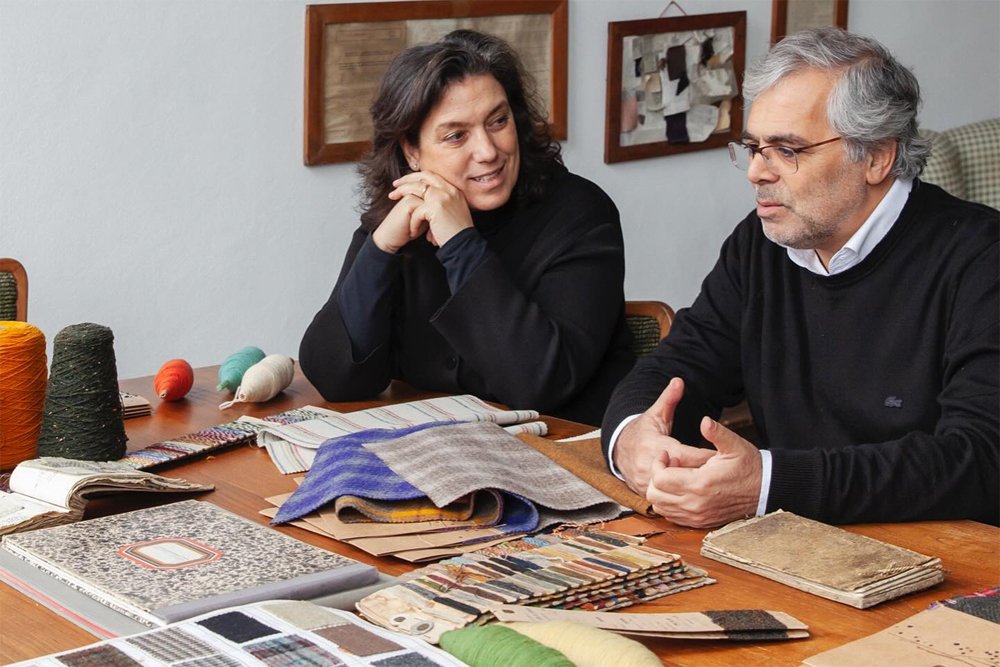
In 2006, Isabel Dias da Costa and João Tomás left their Lisbon careers after falling in love with Serra da Estrela. While building their mountain hotel, Casa das Penhas Douradas, they discovered Lanifícios Império, a wool factory founded in 1947 that was facing insolvency. In 2010, they purchased the factory, preserving its century old machinery and, crucially, retaining the master weavers.
“It was very important to connect the brand with the tradition of Portuguese wool production, local people, and their skills. We have something to be proud of as a nation and we should not be afraid to show it abroad.”
What began as a rescue mission evolved into a multifaceted enterprise. The brand expanded from the factory floor to retail stores in Lisbon and Porto, launched an architectural acoustics division, opened two 4 and 5-star mountain hotels that showcase burel as both design element and functional material, and in 2021 acquired a second factory to complete the entire wool transformation journey from dyeing to finishing.
“Ultimately, we are recoverers of material and immaterial heritage. That’s our mission. Without a past we have no future. We want to improve it with innovation, which is what really matters.”
Behind every piece are 40 Masters of Knowledge, the skilled craftspeople who form the heart of Burel Factory. These carders, spinners, weavers, finishers, and seamstresses guide wool through its transformation with trained eyes and experienced hands. Many are veteran artisans whose expertise, built over decades, is impossible to replicate or rush. Paired with younger apprentices, they ensure centuries of accumulated wisdom passes to the next generation. Without these masters, the machines would fall silent.
Craft and materials
Traditional methods, centuries-old machines
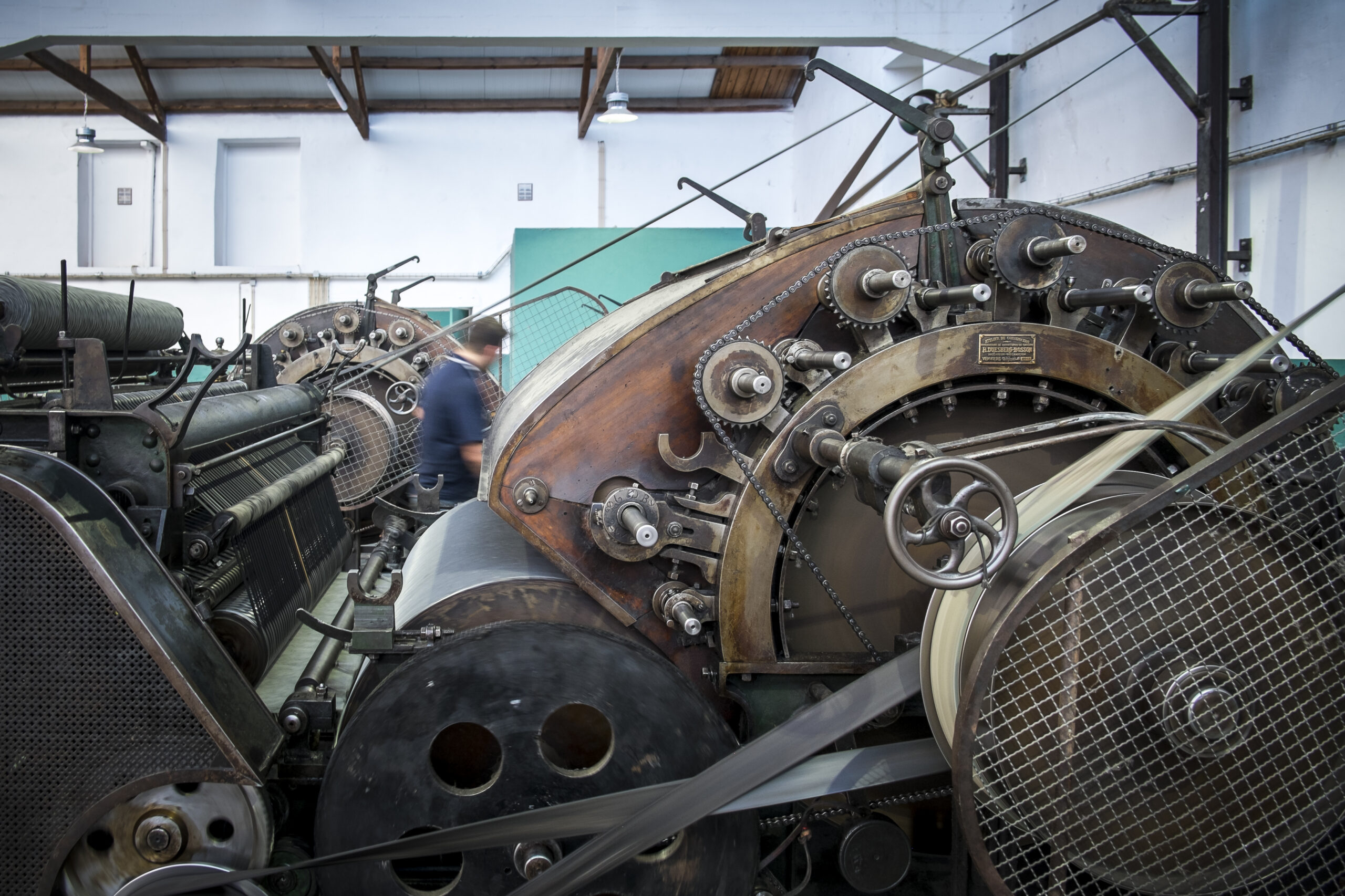
At Burel Factory, production still follows techniques rooted in centuries of Portuguese wool-making. Each piece begins with wool from sheep grazing freely on the upper plateaus of Serra da Estrela, where tender high-altitude vegetation produces softer, higher-quality fibers. What arrives in dense bales will undergo a weeks-long transformation through traditional methods.
Wool is chosen for timeless reasons: it’s natural, renewable, durable, breathable, biodegradable, and ages gracefully. After proper finishing, it becomes water-resistant qualities that made burel legendary among mountain shepherds.
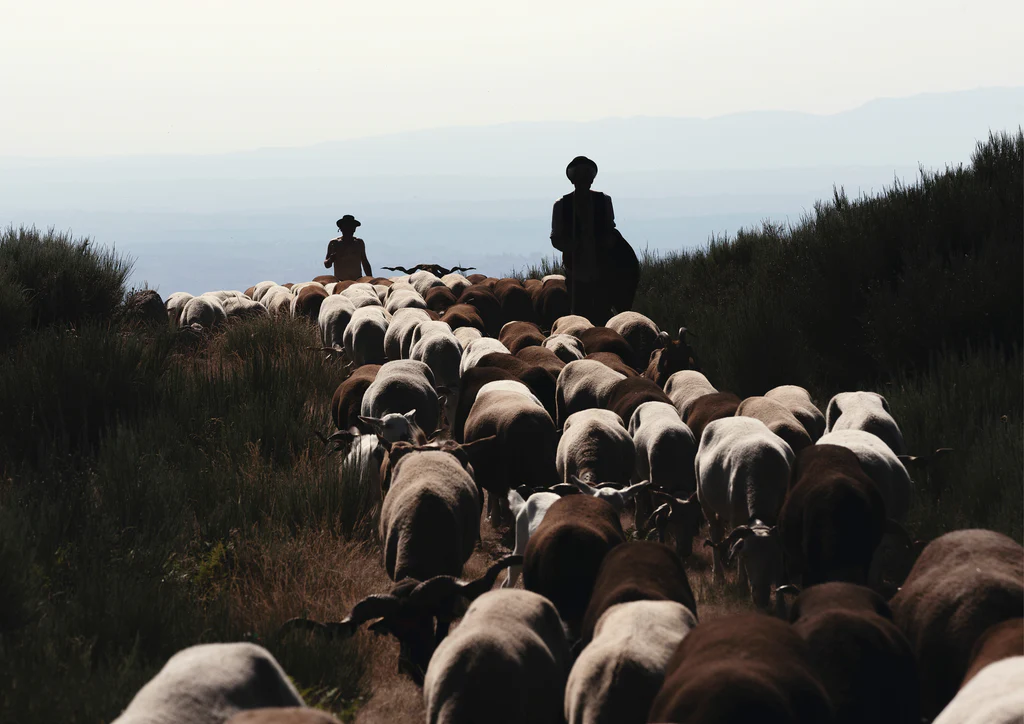
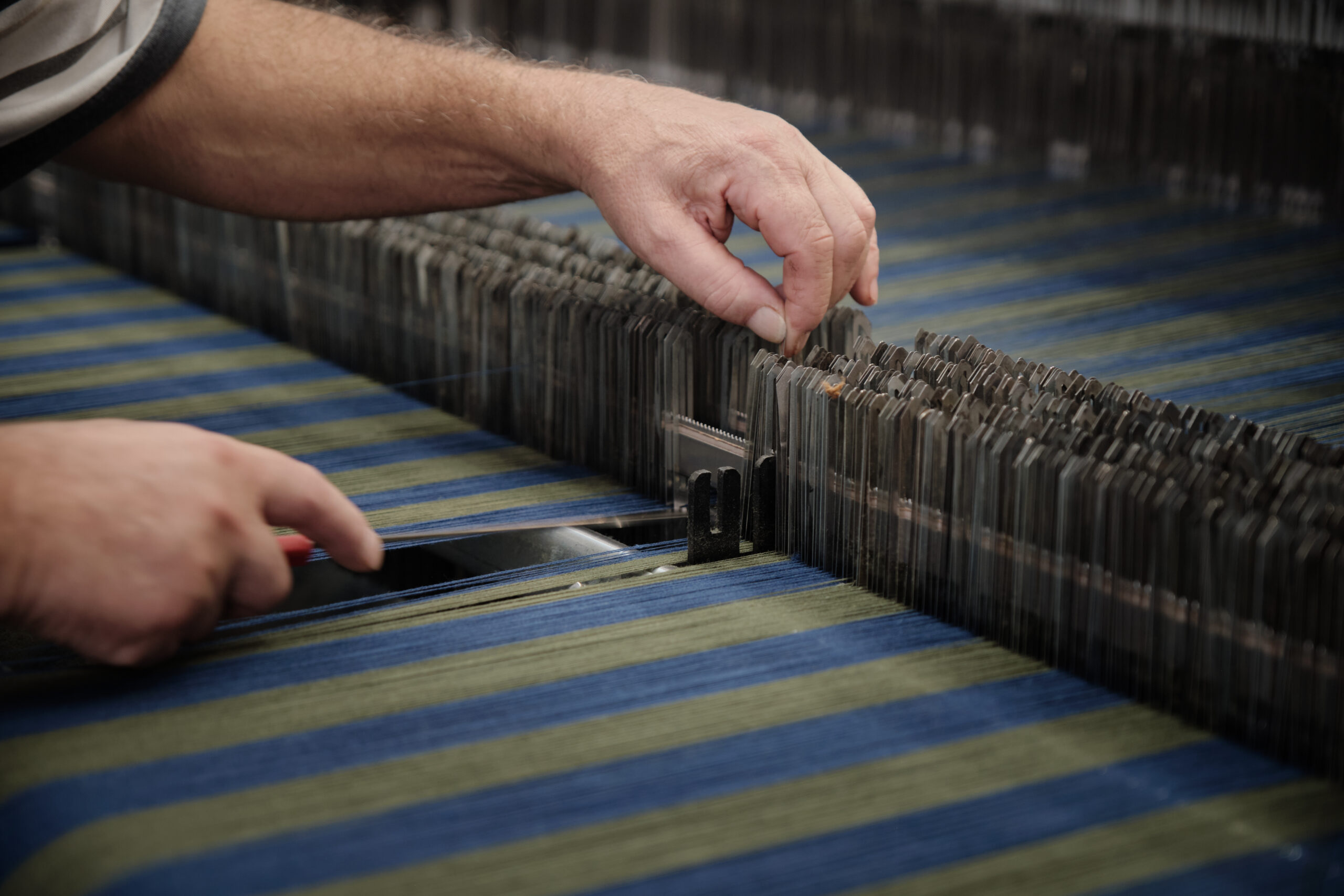
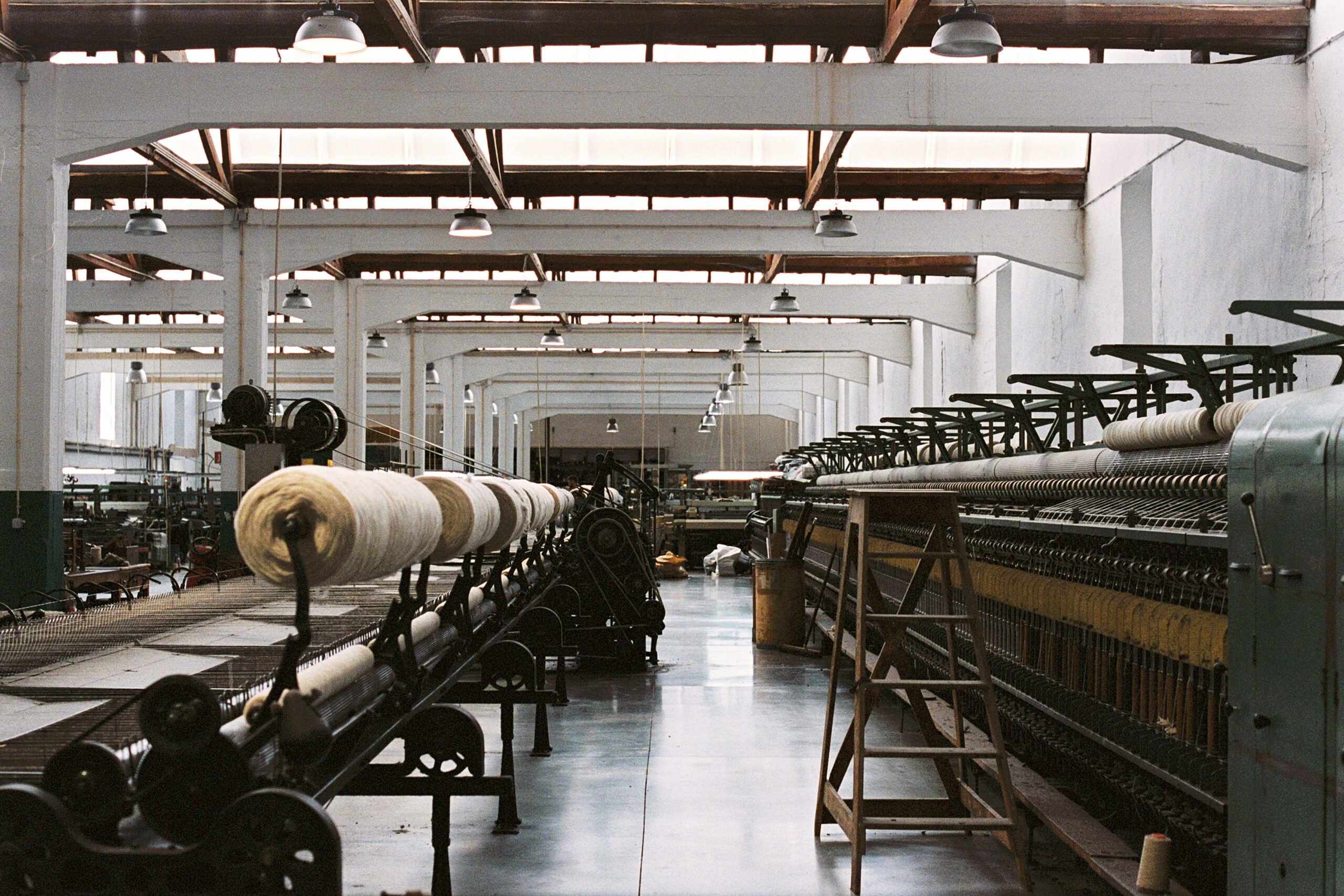
The production process unfolds in five traditional stages: wool bales are opened and mixed to blend colors and soften fibers; century-old Belgian cards tame and align the fibers into uniform texture; spinning mills twist and stretch the material into yarn of varying thickness; looms weave the yarn into xerga fabric (a looser, preliminary fabric), which undergoes rigorous quality control; and finally, the finishing process (where xerga is tramped, moistened with hot water, and shrunk by 30-40%) transforms it into burel, creating the density, softness, and water-resistant qualities that define this legendary fabric.
“We kept the old loom masters to teach the younger ones, to boost the passing of the torch and prevent this craft from disappearing.”
The factory’s distinction lies in its 19th and 20th century looms, not museum pieces but working instruments of daily production. These machines cannot be rushed; they produce at human scale with slow production methods that ensure quality control mass production cannot match. But preservation happens through people. Burel Factory retained the old loom masters and paired them with younger generations, ensuring knowledge transfer that no manual could capture. Many hands finish, sew, and add details that machines cannot replicate. Each piece carries a bit of each person creating it: art seen in the hands and felt in the heart.
From sheep to shearing to weaving to finishing to sale, and eventually back to earth as wool biodegrades, the complete cycle respects both tradition and the environment. Their zero-waste approach came from genuine commitment, not trends.
Timeless design
From ancestral looms to modern design
Burel Factory’s approach to design begins with deep respect for wool as a living material and for the traditions that gave it meaning. Their main source of inspiration comes directly from Serra da Estrela: the colors welcoming different seasons, the organic shapes that flatter the landscape, and the simplicity of sheep that have been shaping these mountains for centuries.
“Our designs are meant to feel relevant across time, avoiding fleeting trends and instead focusing on harmony, simplicity, and beauty that lasts.”
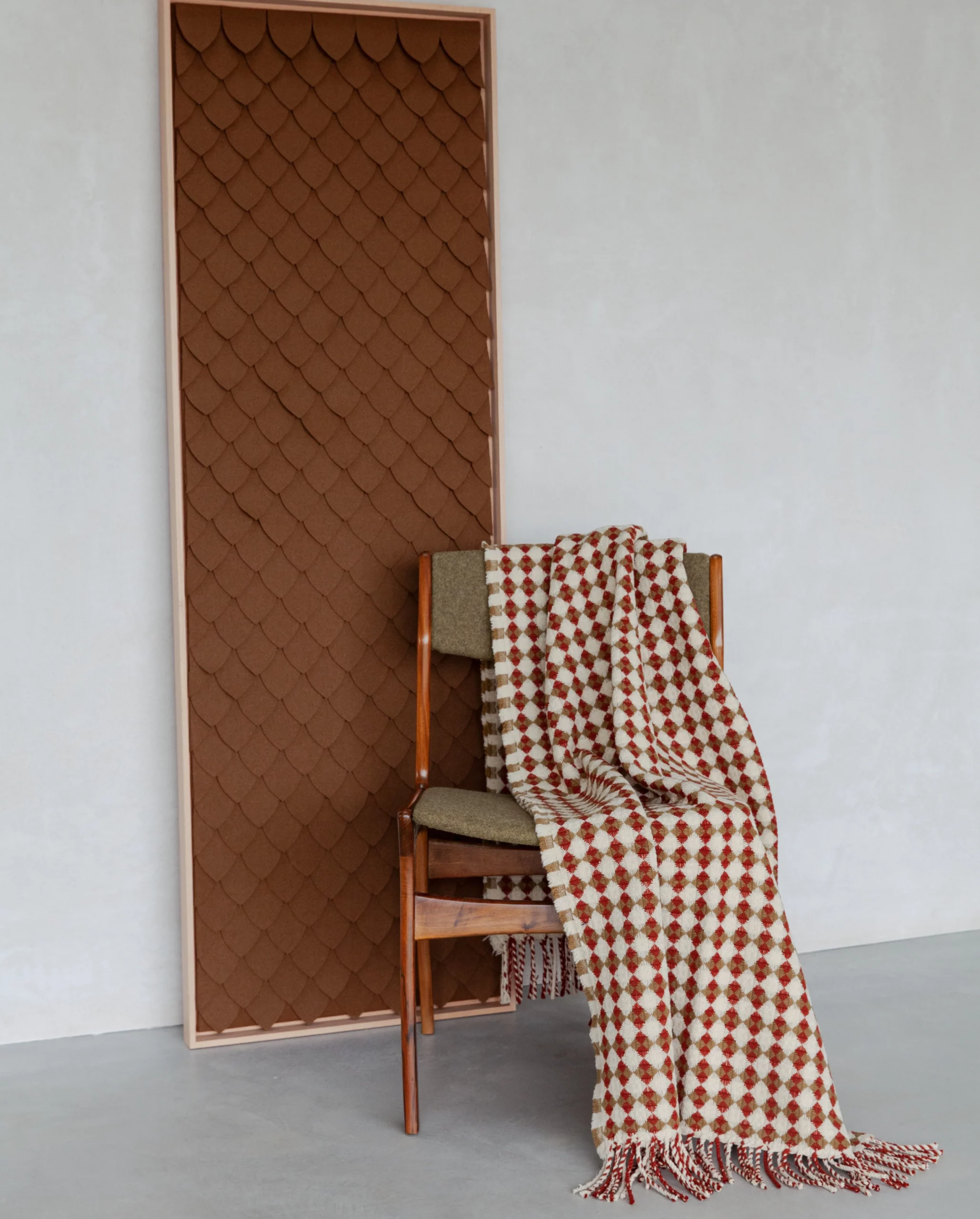
For generations, burel existed only in natural wool colors: browns, grays, whites. Burel Factory changed this, introducing a vibrant palette of 80 colors. This wasn’t merely decorative innovation but a philosophical statement about tradition’s evolution. They recycled patterns from old weaving books, giving historical designs new life in contemporary contexts, proving that honoring heritage doesn’t mean freezing it in time.
Through collaborations with Portuguese designers, the brand has explored applications shepherds of the 19th century could never have imagined: acoustic panels for Microsoft’s Lisbon headquarters, designer furniture, wall art, and fashion pieces. Today their collections span fashion and accessories, interior design, and scientifically certified acoustic solutions for architecture.
Legacy
A commitment to the mountain and its people
Burel Factory knows that more and more people want pieces that tell a story, support craftsmanship, and bring meaning to everyday life.
“We promote and elevate the culture of an inland region, generating jobs and attracting skilled labour to the region, encouraging its economic and social development. We promote Portugal.”
Their approach (combining factory, shops, hotels, and design services) creates a system where tradition pays for itself. Research into wool’s acoustic and thermal properties opens new doors in architecture and sustainability. Factory tours connect visitors with the complete story, from sheep to finished product, while the master-apprentice model ensures centuries of wisdom pass to younger generations.
Buying a Burel Factory piece means supporting craft practiced on century old machines and makers keeping heritage alive for the future. These pieces are made to last decades, age gracefully, and be passed down with stories to tell.

Made to Keep
We handpick our makers and products to be sure they will last a lifetime.

Made in Europe
All products are manufactured in Europe, if not exclusively at the maker’s location.

We stay with you
You will receive maintenance advice, and can access our repair and resell services.

Truly yours
A lot of our handmade products are made to order – just for you.
The Keepers.
Good things worth keeping.
We believe in things made to last: pieces crafted with care, rooted in centuries-old traditions, and designed to outlive trends. Buy to keep. And pass your keepers down the generations with stories to tell.
Follow us: