

Waga
Konjic, Bosnia and Herzegovina · Est. 2015


Waga keeps alive the 150-year old and UNESCO-recognized woodcarving tradition that has shaped Konjic’s region identity for centuries. All pieces are carved by hand from locally sourced walnut, ash, and maple. To own one is to hold a story of endurance, care, and belonging.
Our Waga favourites
-

 Quick Ship
Dunya, Hand-Carved Jewellery BoxMade in Bosnia and Herzegovina by Waga
Quick Ship
Dunya, Hand-Carved Jewellery BoxMade in Bosnia and Herzegovina by Waga -

 Quick Ship
GARDA Butcher BlockMade in Bosnia and Herzegovina by Waga
Quick Ship
GARDA Butcher BlockMade in Bosnia and Herzegovina by Waga -

 Quick Ship
AMBER Wooden Cutting BoardMade in Bosnia and Herzegovina by Waga
Quick Ship
AMBER Wooden Cutting BoardMade in Bosnia and Herzegovina by Waga -

 Quick Ship
AVA Round Wooden Serving TrayMade in Bosnia and Herzegovina by Waga
Quick Ship
AVA Round Wooden Serving TrayMade in Bosnia and Herzegovina by Waga -

 Quick Ship
TAINA Walnut Wood Vanity BoxMade in Bosnia and Herzegovina by Waga
Quick Ship
TAINA Walnut Wood Vanity BoxMade in Bosnia and Herzegovina by Waga -

 Quick Ship
Garda, Table MirrorMade in Bosnia and Herzegovina by Waga
Quick Ship
Garda, Table MirrorMade in Bosnia and Herzegovina by Waga -

 Quick Ship
TAVLA Backgammon Board SetMade in Bosnia and Herzegovina by Waga
Quick Ship
TAVLA Backgammon Board SetMade in Bosnia and Herzegovina by Waga -

 Quick Ship
PAR Wooden BookendsMade in Bosnia and Herzegovina by Waga
Quick Ship
PAR Wooden BookendsMade in Bosnia and Herzegovina by Waga
Origins and people
Revival of a UNESCO craft that unites a divided community
Growing up in Konjic, beside the Mulić family woodcarving shop, Jasmina Dizdarević watched artisans craft tiny wooden furniture for her dolls. “I was enchanted by my custom new toys,” she recalls, “so soon after, I found my second home playing in the shop.”
That childhood connection to craft led her to architecture, where she learned to bring life into spaces. The idea for Waga began when she returned from her PhD studies in Istanbul, longing for the familiarity of her heritage. “Where I come from means a lot to me, so I was determined to craft something that would constantly remind me of my rich origins. I wanted to blend functionality with my heritage, by creating a serving tray with the same motifs my doll furniture had,” she recalls. But when she reached out to the old craftsmen from her childhood, she discovered they had closed their workshops.
“It was at that moment that I felt a strong urge to preserve my heritage and provide work for the craftsmen.”
Determined to keep the tradition alive, Jasmina founded Waga in 2015, blending her architectural eye with local artisans’ skill. Later joined by Georges-Antoine Ventillard, she turned Waga into a movement to revive UNESCO-listed Konjic woodcarving – proving that each piece can carry both beauty and belonging.

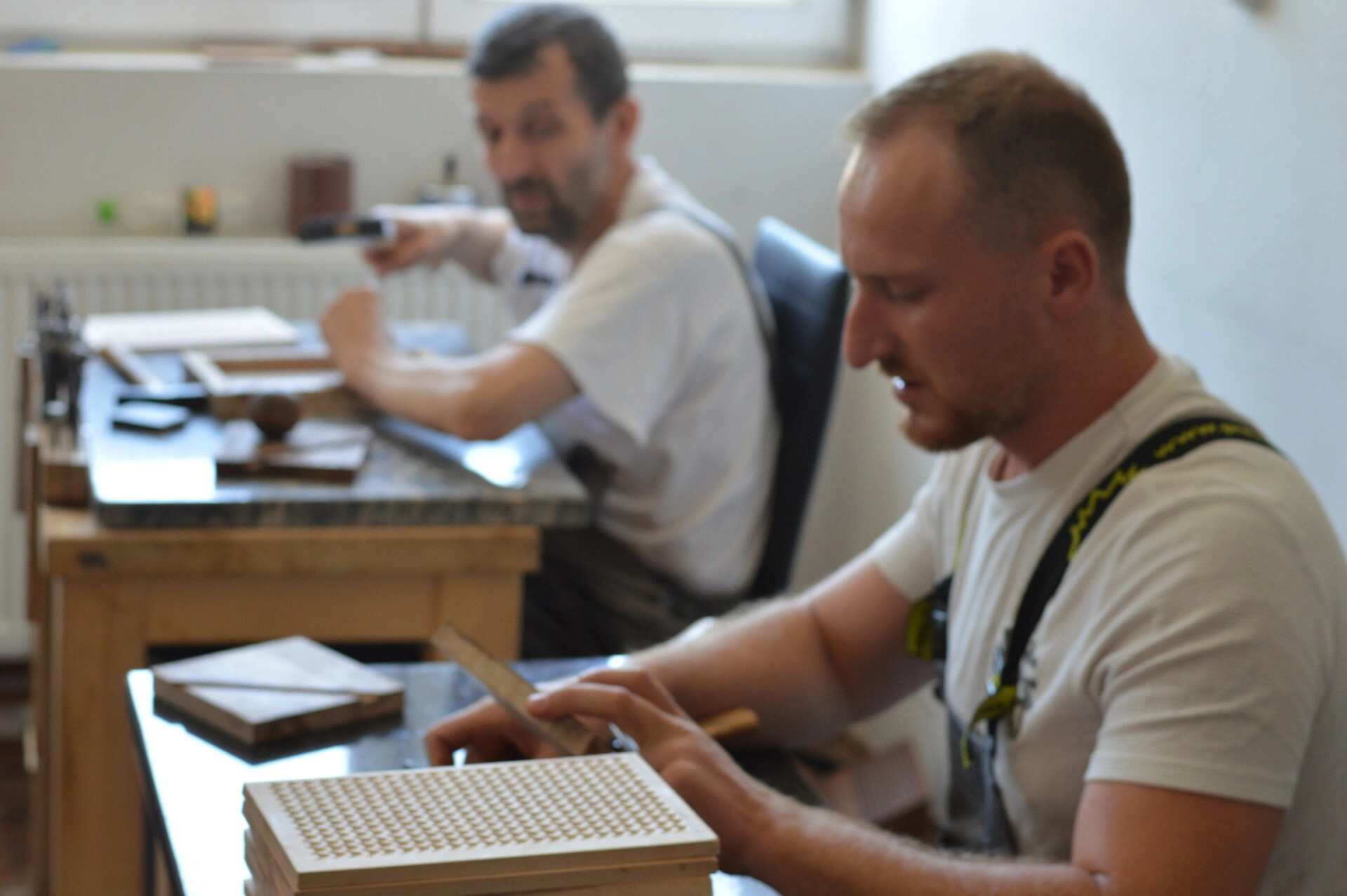
In Waga’s workshop, the rhythm of carving feels almost meditative. It’s a space where people of different ages and backgrounds work side by side, united by patience and shared pride. “It was nearly impossible,” recalls founder Jasmina Dizdarević. “But I was determined to find young people who would embrace this work and train them.”
Today, seven artisans, together with a small creative team, keep Konjic’s UNESCO-recognised woodcarving tradition alive. Sulejman and Vahidin shape the raw wood with steady hands, setting the foundation for every piece that follows. Seid, who learned the craft from his father and brother, carves with the rhythm of sevdah music. Asmir, a meticulous young craftsman, brings precision to every pattern. Emina, still a student, joins between her classes, while Amina and Sladjana give each surface its silk-smooth finish.
Together, they are Bosnia’s living link between heritage and innovation.
Craft and materials
Carved by hand, with love for nature and homeland
Konjic woodcarving was inscribed on UNESCO’s Representative List of the Intangible Cultural Heritage of Humanity in 2017. It earned this recognition for being a completely unique tradition, unrepeated anywhere in the world. What makes it remarkable isn’t only the beauty of its designs, but the way it unites people. In Konjic, artisans of all ages, genders, and backgrounds carve side by side, turning wood into an art of healing as much as making.
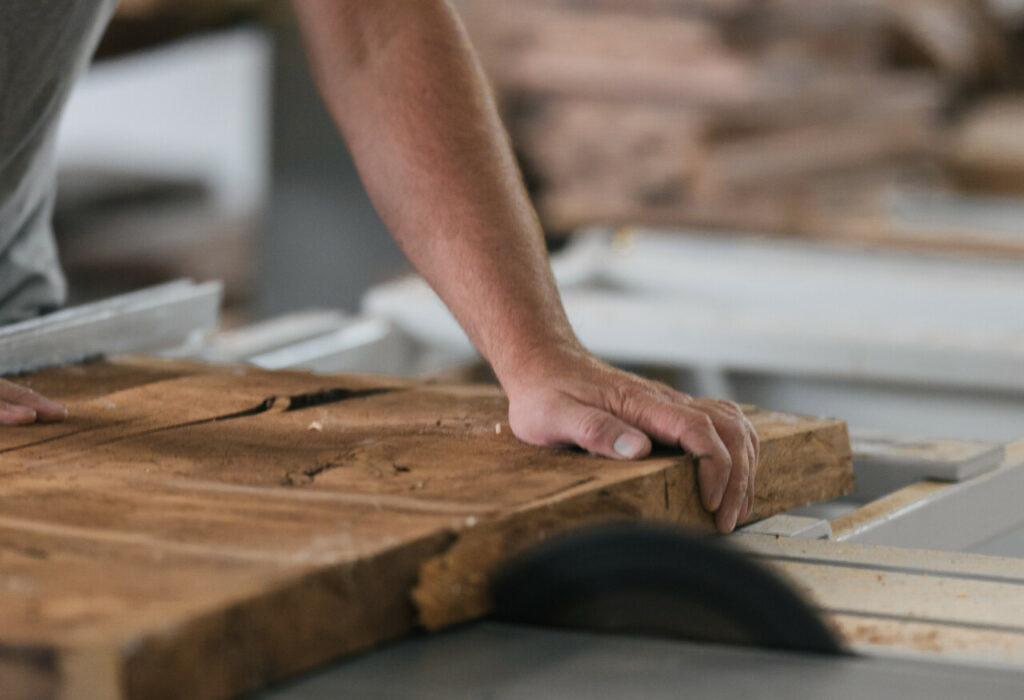
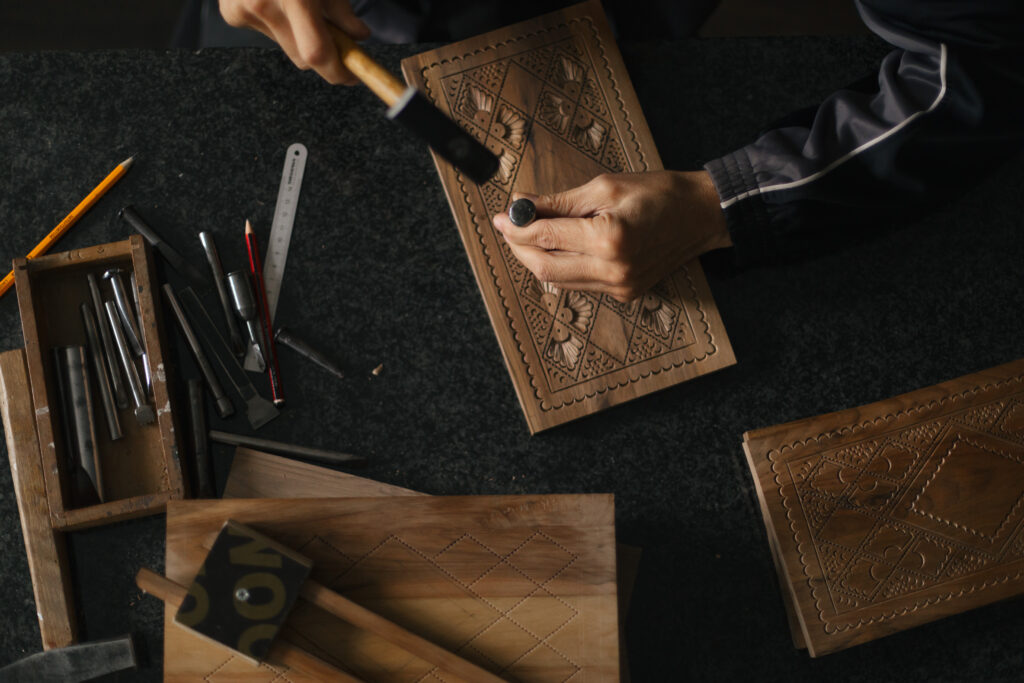
At Waga, this living heritage continues. Technology is used intentionally, only to shape and strengthen the wood before the hand takes over. The next stages: natucanje, kopanje, and cifranje, bring the material to life. Artisans first draw geometric and floral motifs, then chip along each line with chisels and hammers, gradually deepening the relief. Every pattern reflects centuries of cultural exchange, from Ottoman arabesques to Illyrian geometry.
Each piece is sanded smooth and finished with food-safe dyes and flaxseed oil, left to rest for two days before delivery. The result: a beautiful product that you will want to cherish and keep.
When it comes to materials, every decision begins with care: for nature, heritage, and place. The wood comes from Bosnian forests through FSC-certified local suppliers, supporting both the ecology and the community.
Each plank is hand-picked for its character and suitability for carving. The team primarily works with walnut, ash, and maple, woods known for their soft yet sturdy structure, allowing artisans to carve in multiple directions without cracks or splits. Walnut offers rich tone and strength, ideal for statement pieces. Ash, flexible and light, lends itself to detailed carving. Maple, smooth and refined, provides a clean surface that brings out intricate motifs.
Every piece is finished with natural dyes and organic oils that protect the wood and deepen its tone. Even the offcuts find new life, reused or turned into pellets for fire. From forest to finished carving, Waga’s process forms a cycle of respect and renewal.
Timeless design
Drawing on centuries-old patterns to create timeless aesthetic
Rather than following trends, Jasmina decided to look back to motifs that have connected generations and give a new life to everyday objects.
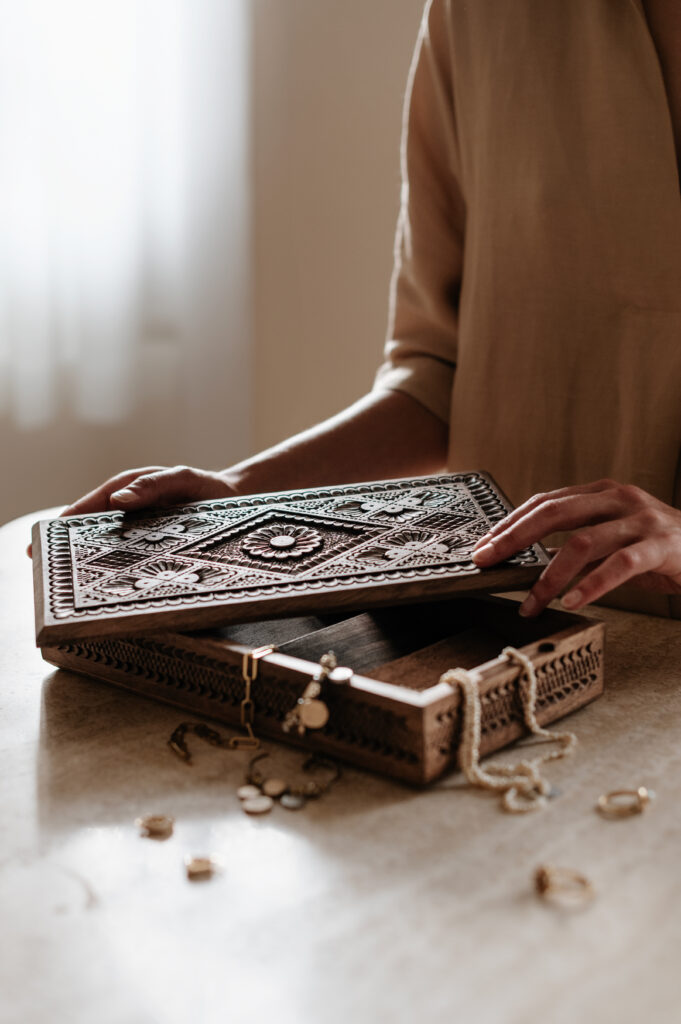
These designs are more than decoration. The Rešma pattern, meaning “threaded pearls,” symbolises unity and mutual support within the community. The Konjic rose evokes purity and the region’s deep bond with nature, while geometric motifs rooted in Islamic art reflect rhythm, harmony, and contemplation.
For Slađana, one of Waga’s artisans, the meaning runs deep: “For me, these patterns represent the cultural fabric of Bosnia and Herzegovina. Each curve and line is an enduring symbol of resilience and identity of the people who have been here for centuries. Through these patterns, I find personal and collective identity, seeing them as a legacy that connects my modern life with the historical depth of my culture.”
“They are for me, a source of pride and a constant reminder of my heritage’s uniqueness and beauty.”
Each carving becomes a dialogue between history and modern life, proof that true timelessness is born from continuity, not change.
Legacy
A workshop becoming a movement to safeguard Bosnia’s heritage
At Waga, craftsmanship is only the beginning. What started as a small workshop in Konjic has grown into a mission to ensure Bosnia’s oldest art form has a future.
Jasmina dreams of opening Waga’s doors as a classroom where anyone can learn the delicate art of Konjic woodcarving and help keep it alive. Training young artisans is now at the heart of her work, a quiet rebellion against the decline of traditional skills.
The challenge ahead is steep: fewer craftsmen, faster lives. But Waga answers with a plan: by teaching, employing, and inspiring those who will carry the chisel next.
By choosing Waga, you become part of this story, supporting sustainable creation, cultural preservation, and a future where beauty endures because it is made with purpose.


Made to Keep
We handpick our makers and products to be sure they will last a lifetime.

Made in Europe
All products are manufactured in Europe, if not exclusively at the maker’s location.

We stay with you
You will receive maintenance advice, and can access our repair and resell services.

Truly yours
A lot of our handmade products are made to order – just for you.
The Keepers.
Good things worth keeping.
We believe in things made to last: pieces crafted with care, rooted in centuries-old traditions, and designed to outlive trends. Buy to keep. And pass your keepers down the generations with stories to tell.
Follow us: