

Wendt & Kühn
Grünhainichen, Germany · Est. 1915


In the Erzgebirge mountains of Saxony, Wendt & Kühn has been making hand-painted wooden angels and musical boxes since 1915. Each figure is shaped on a lathe (a spinning tool that carves wood into rounded forms), then assembled, painted, and dotted by hand. Their signature eleven dot angels, childlike figures with green wings bearing eleven white dots, are recognized the world over. This is wooden art made to be kept.
Our Wendt & Kühn favourites
-

 Quick Ship
Angel with Gifts, on ClipMade in Germany by Wendt & Kühn
Quick Ship
Angel with Gifts, on ClipMade in Germany by Wendt & Kühn -

 Music box “Christmas Procession”Made in Germany by Wendt & Kühn
 -

 Quick Ship
Little Suspended Angel, with Christmas BaubleMade in Germany by Wendt & Kühn
Quick Ship
Little Suspended Angel, with Christmas BaubleMade in Germany by Wendt & Kühn -

 Quick Ship
Angel with Balalaika, SuspendedMade in Germany by Wendt & Kühn
Quick Ship
Angel with Balalaika, SuspendedMade in Germany by Wendt & Kühn -
 Quick Ship
Angel with Shawm, in StarMade in Germany by Wendt & Kühn
Quick Ship
Angel with Shawm, in StarMade in Germany by Wendt & Kühn -
 Quick Ship
Angel with Bell and Candle, on CometMade in Germany by Wendt & Kühn
Quick Ship
Angel with Bell and Candle, on CometMade in Germany by Wendt & Kühn -

 Angel with Small Trumpet, SuspendedMade in Germany by Wendt & Kühn
 -

 Quick Ship
Angel with Doll, in RingMade in Germany by Wendt & Kühn
Quick Ship
Angel with Doll, in RingMade in Germany by Wendt & Kühn -

 Quick Ship
Angel with Gingerbread and Apple, on ClipMade in Germany by Wendt & Kühn
Quick Ship
Angel with Gingerbread and Apple, on ClipMade in Germany by Wendt & Kühn -
 Quick Ship
Little suspended angel, with lanternMade in Germany by Wendt & Kühn
Quick Ship
Little suspended angel, with lanternMade in Germany by Wendt & Kühn -

 Quick Ship
Angel Holding CandlesMade in Germany by Wendt & Kühn
Quick Ship
Angel Holding CandlesMade in Germany by Wendt & Kühn
Origins and people
From art school friends to a century of wooden angels
The story begins in Dresden, where two young women studied applied arts at the Royal Saxon Academy. Margarete Wendt, called Grete, came from Grünhainichen, a small town in the Erzgebirge mountains where toymaking had been a way of life for generations. Between 1907 and 1910, she learned to see wood not as raw material, but as something that could hold expression, personality, even joy.
While still a student, she designed a nativity scene for a progressive furniture maker. After graduation, she returned home. In 1913, she entered a design competition with three small wooden figures picking berries. The “Berry Children” won prizes, and orders started arriving. The figures were made in her parents’ home and by local toymakers, and the demand kept growing.
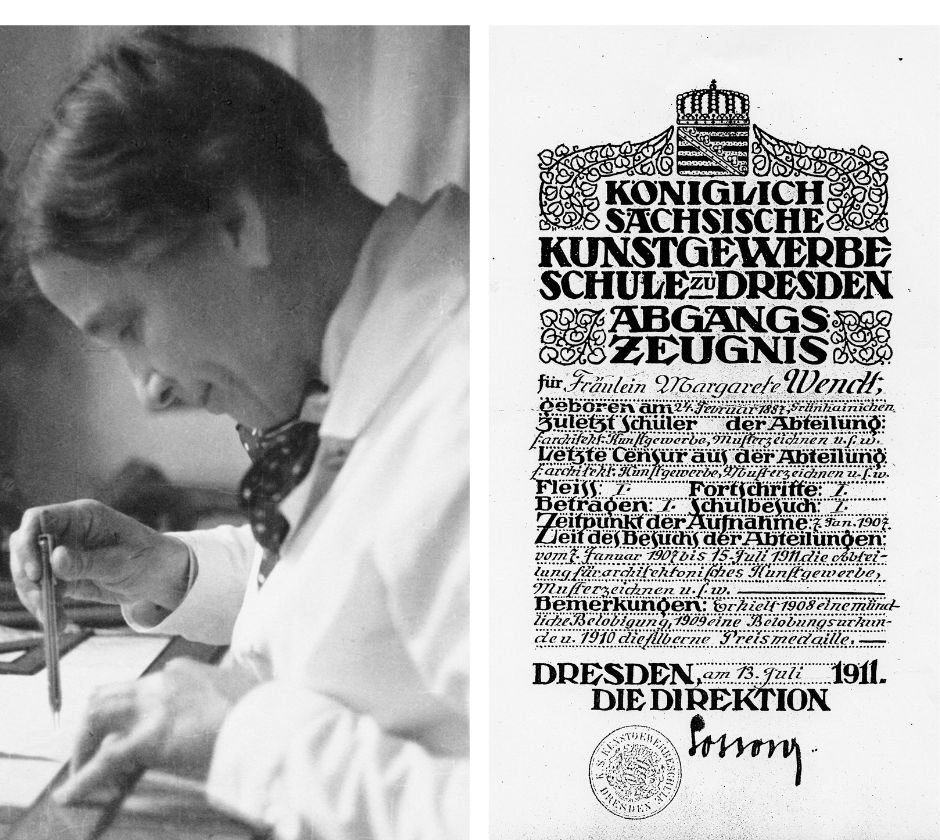
On October 1, 1915, Grete invited her art school friend Margarete Kühn to join her. Together they founded “M. Wendt u. M. Kühn” and registered a trademark: a weather-beaten spruce with their initials, designed by their Dresden professor. Within a year, they were exhibiting at the Leipzig Spring Trade Fair. Grete’s brother Johannes joined to handle the business. A talented designer named Olly Sommer arrived from Dresden and brought her own vision: figurines like the Moon Family and painting techniques that became signature to the workshop. The company grew around this small circle of makers, each adding their voice to the work.
“Only when you do something with love will it also return love.”
What set Grete’s work apart was her technique: wooden components turned and shaped separately, then joined to create figures that seemed to move and breathe. At the 1937 Paris World Exhibition, her Angel Mountain with Madonna won a gold medal and the Grand Prix.
The company survived difficult decades. In 1972, it was forcibly nationalized. Grete left the day it was taken. She died in 1979 at age 92, but her designs continued. Even under state control, the workshop avoided mass production, keeping its craft alive when many traditions were lost.
With German reunification in 1990, the company returned to the family. Investment followed: workshops renovated, machinery modernized, the historic half-timbered house restored. The workforce grew from 100 to 182 artisans.
Today, Grete’s great-niece Claudia Baer and her brother Dr. Florian Wendt run the company. Four generations have carried the work forward. The wood still comes from local forests. The angels are still painted by hand. The craft is still taught through years of patient apprenticeship.
Craft and materials
From Erzgebirge forests to hand-painted details, made entirely in Grünhainichen
Every Wendt & Kühn figurine begins with timber from the Erzgebirge region: maple, beech and spruce. The wood is sourced directly from local sawmills, keeping transport short and supporting regional forestry that complies with high standards in afforestation. Around 70 cubic meters are used each year for the production of angels, Blossom Kinder, and animal figurines.
“Each individual piece passes through around sixty hands during production – from the initial moulding to the final finishing. The entire process takes place here in Grünhainichen.”
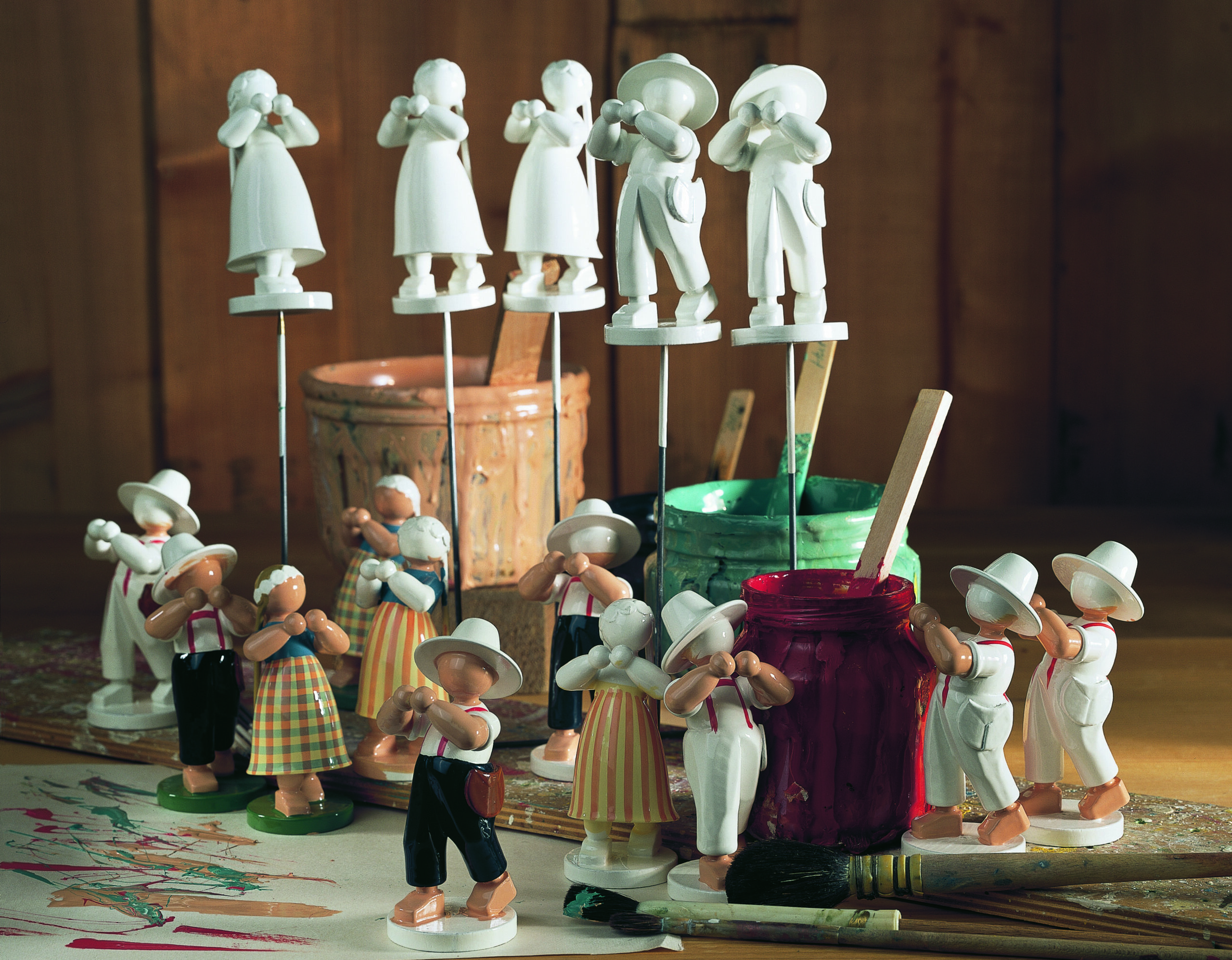
In the lumberyard, logs cut into boards are left to dry for a good two years before they can be fashioned into square, flat, or rounded profiles. The wood is then shaped on the lathe with wood turning tools, curl by curl. Under the skilled hands of the wood turners, the initial forms emerge: bodies, wings, instruments. These are cut, milled, and sanded into their final shape.
Miniscule parts are glued together with care.
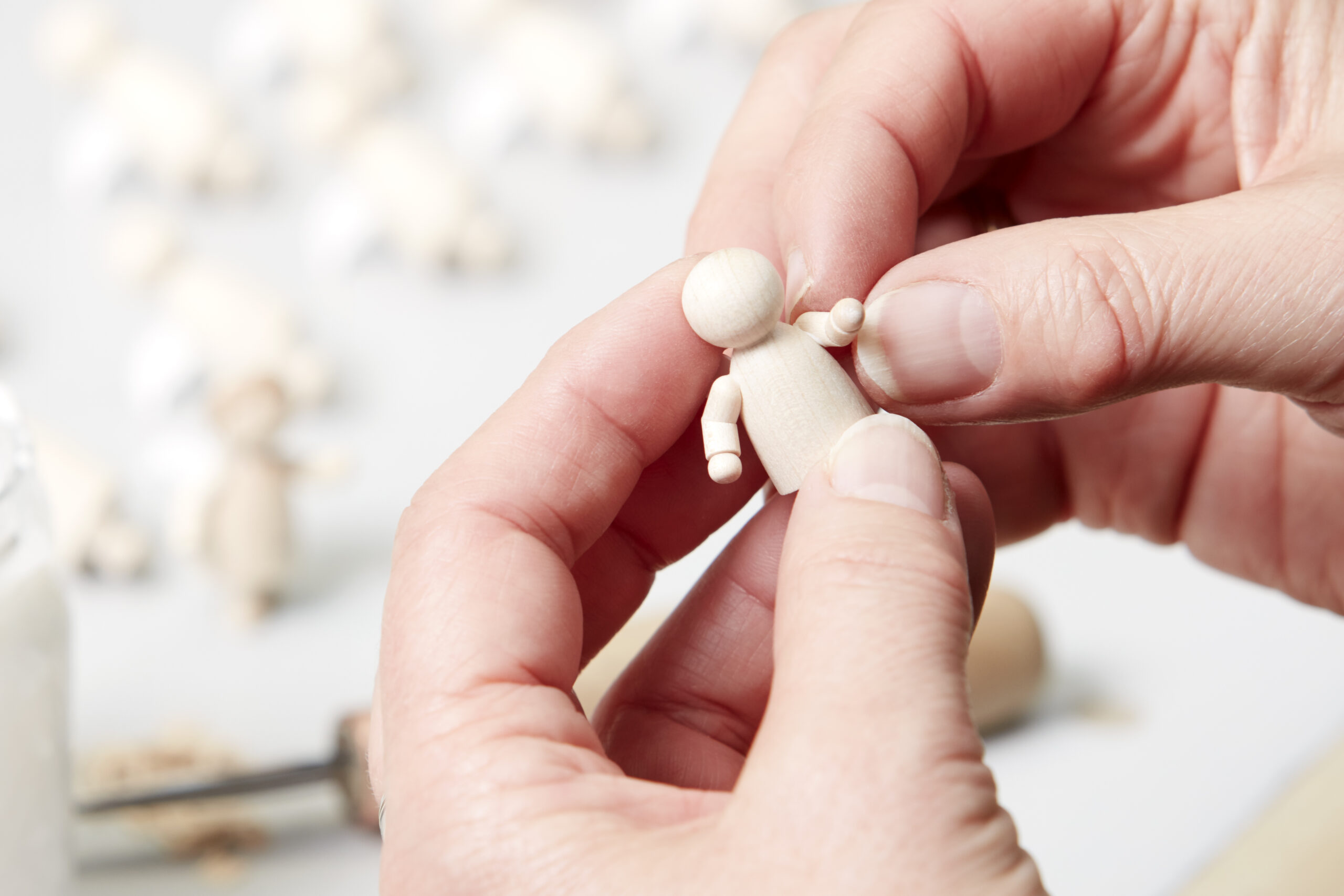
The Grünhainichen Angels take form from body, instrument, and wings. Before painting, each figurine receives a coating of white primer. An even light-colored base undercoat gives the later paint layers their warm radiance. The figurines are placed onto needle-like rods after being dipped in primer and twirled to spin off excess. The now uniformly even base coat is left to harden.
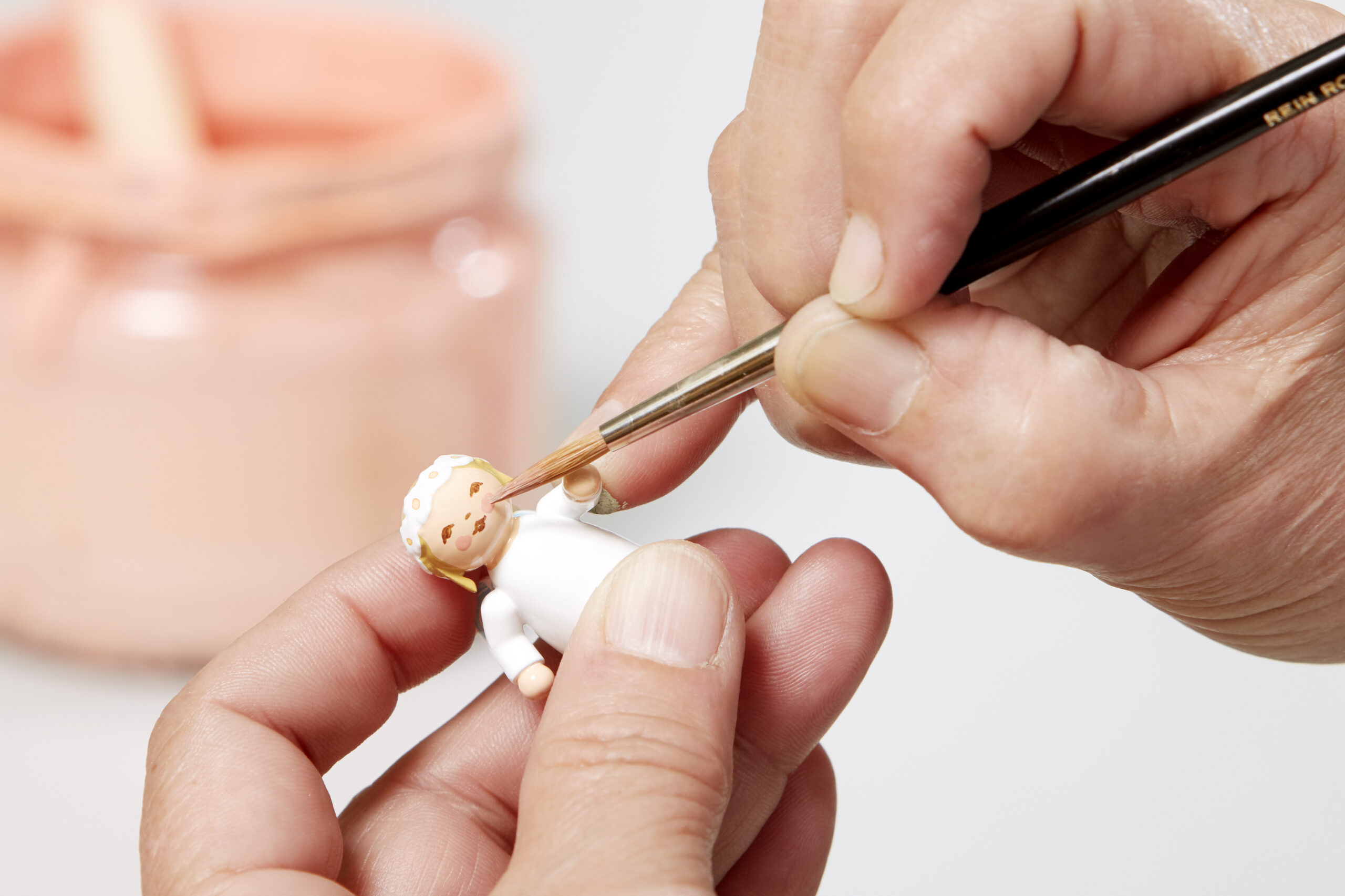
Then comes the painting. Experienced hands carefully apply fine brush strokes to each figurine, accessory, and music box. The colors and embellishments were dictated decades ago in the original designs from Grete Wendt and Olly Wendt, which still serve as guidelines today. The signature green on the angels’ wings is made from a secret recipe developed over a century ago.
The eleven white dots on each angel’s wing are added with precision. Each dot requires a steady hand and years of practice. The finishing touches: skilled hands carefully apply final details and mark the underside of each base with the initials “W. u. K.” to authenticate its origin.
The wood shavings produced during turning aren’t wasted. They’re used in the company’s internal heating system, a practice rooted in centuries of woodworking tradition. An efficient waste-to-energy plant built in 1995 feeds directly from workstations via suction holes, covering almost all the heat supply for the northern production facilities.
Timeless design
Over 2,500 original designs, faithfully reproduced for more than a century
Wendt & Kühn doesn’t follow trends. The work draws from a treasure trove of more than 2,500 original designs, patterns, and drawings from Grete Wendt and Olly Wendt. In faithfully reproducing them, the company has retained the original shapes and colors. Through the passing of craftsmanship from generation to generation, each piece becomes a work of art that radiates charm, tradition, and the unmistakable character of its creators.
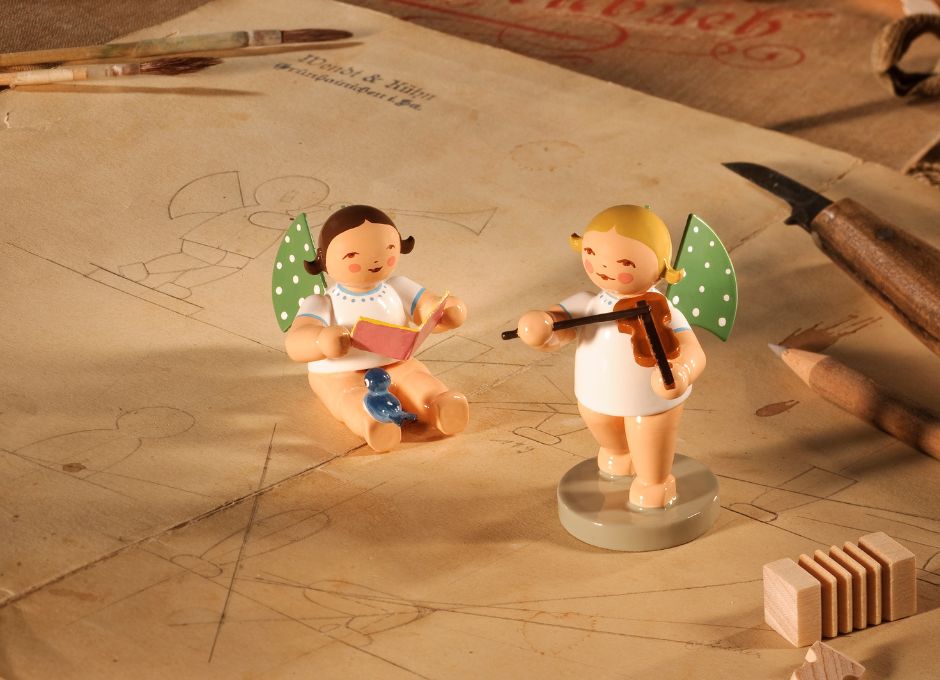
The most famous are Grete’s Grünhainichen Angels with their eleven dots, created in 1923. These childlike figures with green wings and confident expressions have touched hearts worldwide for over a century. The Marguerite Angels, designed by Olly Wendt, are equally beloved: delicate messengers engaged in diverse activities that make them endearing companions year-round.
The forms are deliberately simple. No bright synthetic colors, no trendy flourishes. Just the warm tone of local wood, the vibrant green of angel wings, the careful details that emerge only on close inspection. This restraint is purposeful. It keeps the focus on what matters: the craft, the patience, the love woven into each piece.
The designs don’t need updating because good design doesn’t need reinvention. A figurine made in 1925 sits comfortably beside one made today. Every year, select pieces are removed from production for at least five years and given a place in the Grand Sample Cabinet.
Legacy
Treasured heirlooms that carry stories forward
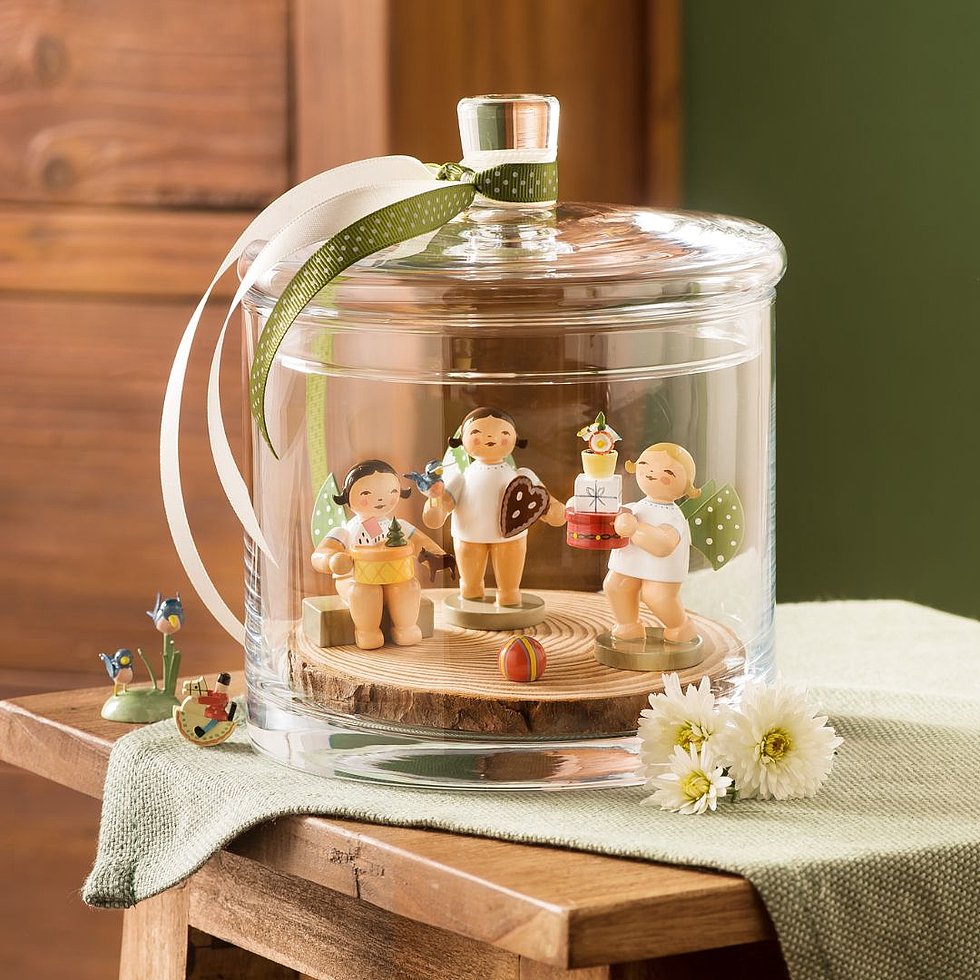
Wendt & Kühn angels have become more than decorative figures. They’re given for baptisms, weddings, holidays, and quiet moments that deserve marking. Parents who received angels as children now watch their own children discover the same small wooden figures.
The collection has grown to over 70 Marguerite Angels and more than 80 Grünhainichen Angels, each playing a different instrument. New angels are still introduced regularly, always rooted in Grete Wendt’s design language.
In 2023, the company celebrated the 100th anniversary of the Eleven Dot Angels. Letters arrived from collectors sharing childhood memories: the ritual of bringing angels out at Christmas, the comfort these figures provided through life’s changes. The anniversary brought a sense of responsibility to continue creating pieces that keep childhood memories alive.
The manufactory continues from Grünhainichen, maintaining its small-scale approach. Visitors can tour the workshops twice a year or watch painters at work at their store in Grünhainichen. The legacy lives on in the hands that still create these figures, just as Grete Wendt envisioned more than a century ago.

Made to Keep
We handpick our makers and products to be sure they will last a lifetime.

Made in Europe
All products are manufactured in Europe, if not exclusively at the maker’s location.

We stay with you
You will receive maintenance advice, and can access our repair and resell services.

Truly yours
A lot of our handmade products are made to order – just for you.
The Keepers.
Good things worth keeping.
We believe in things made to last: pieces crafted with care, rooted in centuries-old traditions, and designed to outlive trends. Buy to keep. And pass your keepers down the generations with stories to tell.
Follow us: