

Bortolato
Pliskovica, Slovenia · Est. 1996


In Slovenia’s Karst region, stone has shaped villages and homes for centuries. Jernej Bortolato brings that heritage into modern life, crafting bowls, vases, and grinders from local limestone rich with 50-million-year-old fossils. Once an electrician and knitter, he now blends skills from many trades to give stone new purpose and beauty.
Our Bortolato favourites
-

 Quick Ship
Karst stone spice mortarMade in Slovenia by Bortolato
Quick Ship
Karst stone spice mortarMade in Slovenia by Bortolato -

 Quick Ship
Stone bookendsMade in Slovenia by Bortolato
Quick Ship
Stone bookendsMade in Slovenia by Bortolato -

 Quick Ship
Stone bowlMade in Slovenia by Bortolato
Quick Ship
Stone bowlMade in Slovenia by Bortolato -

 Quick Ship
Stone food containersMade in Slovenia by Bortolato
Quick Ship
Stone food containersMade in Slovenia by Bortolato -

 Quick Ship
Stone rolling pinMade in Slovenia by Bortolato
Quick Ship
Stone rolling pinMade in Slovenia by Bortolato -

 Quick Ship
Stone serving plateMade in Slovenia by Bortolato
Quick Ship
Stone serving plateMade in Slovenia by Bortolato -

 Quick Ship
Stone spice mortarMade in Slovenia by Bortolato
Quick Ship
Stone spice mortarMade in Slovenia by Bortolato -

 Quick Ship
Stone vaseMade in Slovenia by Bortolato
Quick Ship
Stone vaseMade in Slovenia by Bortolato
1. Origins and people
Giving Karst Stone a Second Life Inside the Home
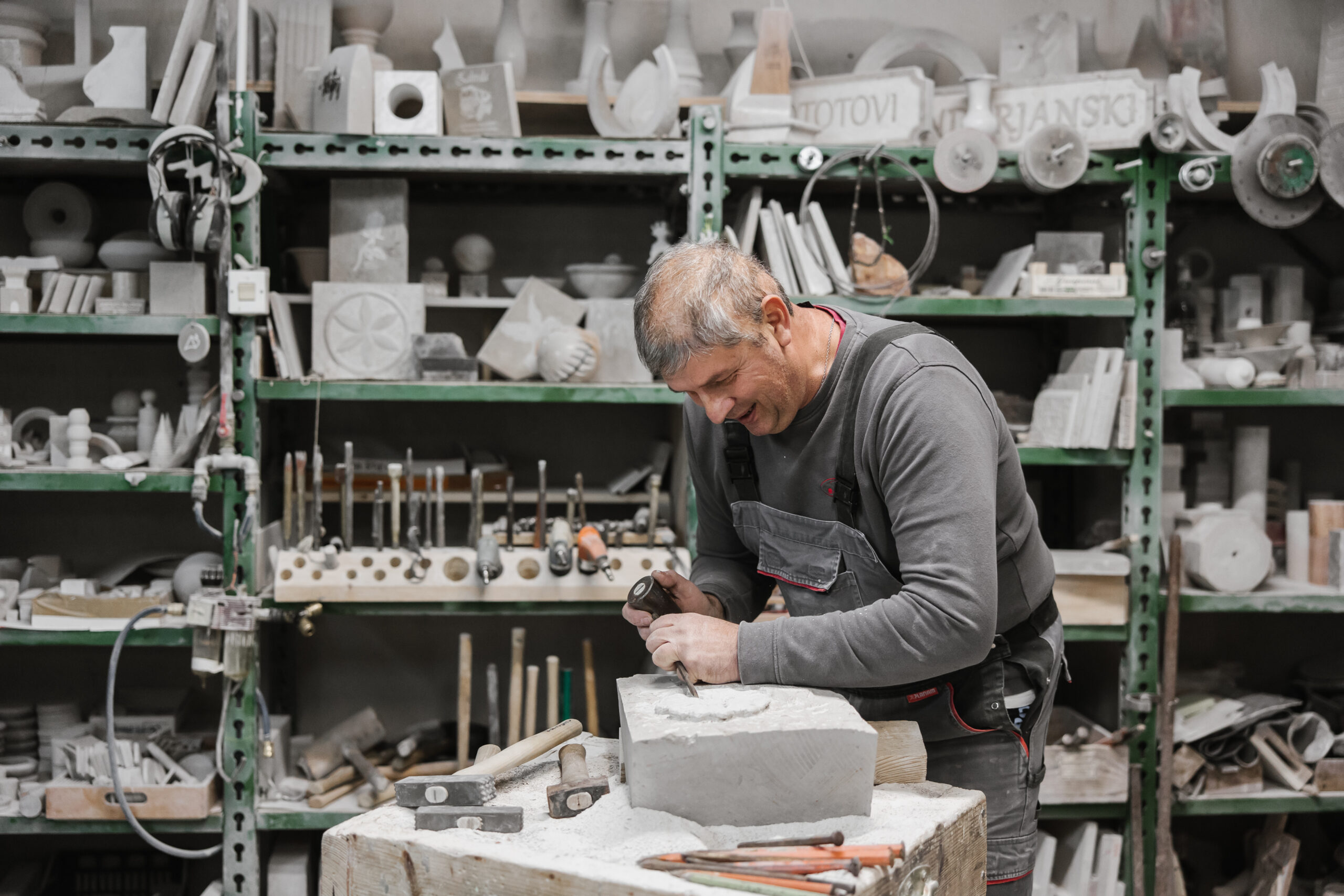
In the wind-shaped villages of Slovenia’s Karst plateau, stone has always been more than a material. It built homes, protected families, and carried memory – as stone engraved portals, stone walls and large pots for keeping food fresh for long. Today, as many old stonemason traditions fade, Jernej Bortolato is among the few who continue to speak the language of stone and teach it to others.
From the start, Jernej set himself a clear challenge to make stone part of everyday life again. The answer, he believed, lay in smaller, functional objects that bring the Karst spirit indoors: mortars, grinders, bowls, and vases. Yet, traditional stonemason tools were made for heavy architectural work, not for the fine precision such pieces require.
Drawing on his unusual background: once an electrician, a knitter, and the son of a metalworker, Jernej began experimenting. He adapted and built his own tools, combining knowledge from different crafts. It was a long process of trial and error, full of broken stones and late nights in the workshop, until he found the rhythm that let the stone speak back to him.
Today, nearly three decades later, he holds Slovenia’s highest craftsmanship certificate and multiple national awards. But his workshop in Pliskovica remains an open, humble place where visitors are welcomed, ideas are shared, and the quiet dialogue between man and stone continues.
2. Craft and materials
The Limestone Fossils That Live on Your Table
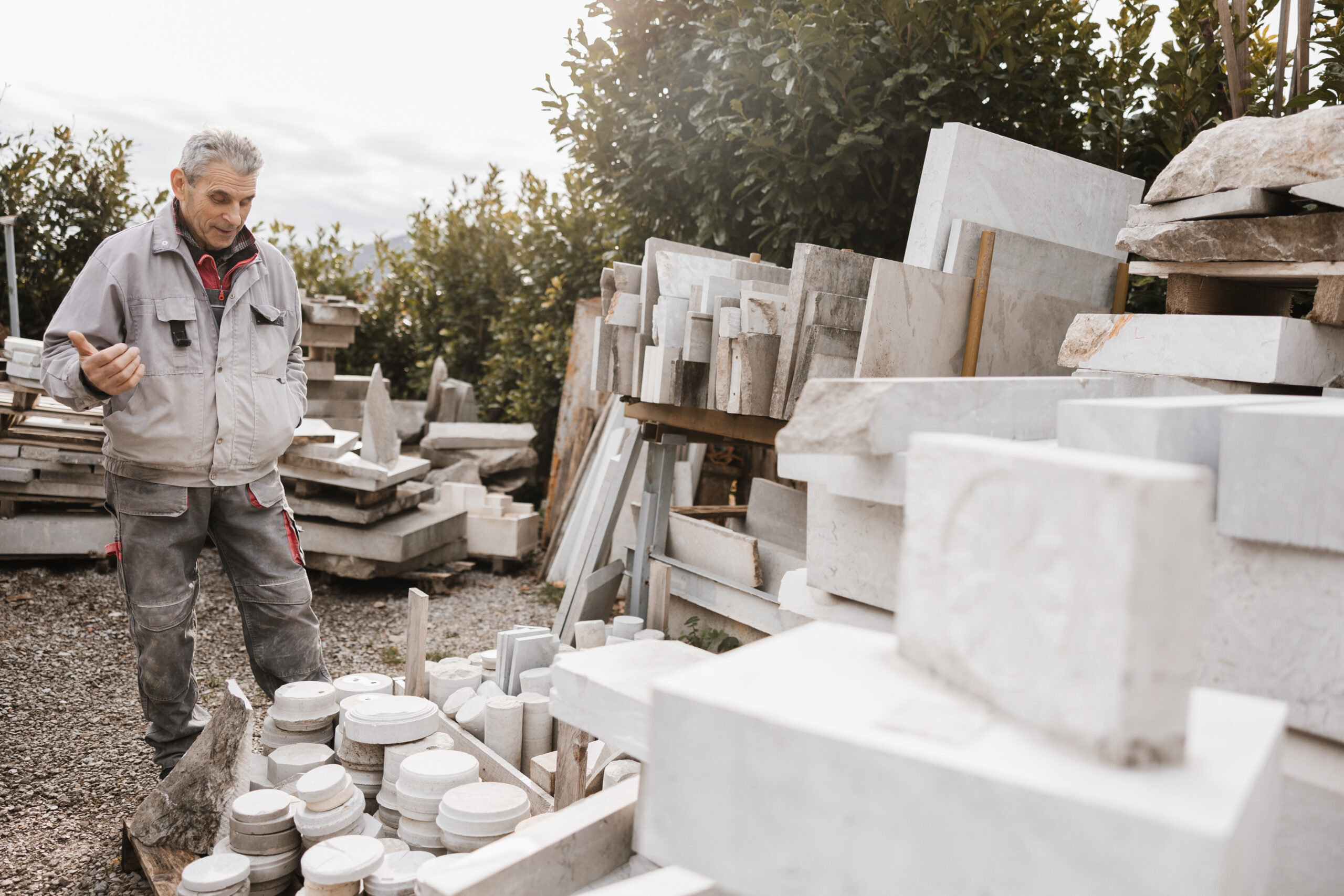
Jernej Bortolato works with five local limestone quarries, each known for a slightly different texture and tone. He chooses the stone based on the feeling he wants to achieve in the final piece: fine-grained for clean, minimalist forms; more textured when he wants the natural story of the stone to show through. In some bowls, you can even spot circular fossil imprints, traces of life from more than 50 million years ago.
Before any carving begins, Jernej personally selects and inspects each block. He pours water over its surface to reveal hidden cracks and works only with stone that passes his test.
“Every piece has to be healthy or it will break before it becomes what it’s meant to be.”
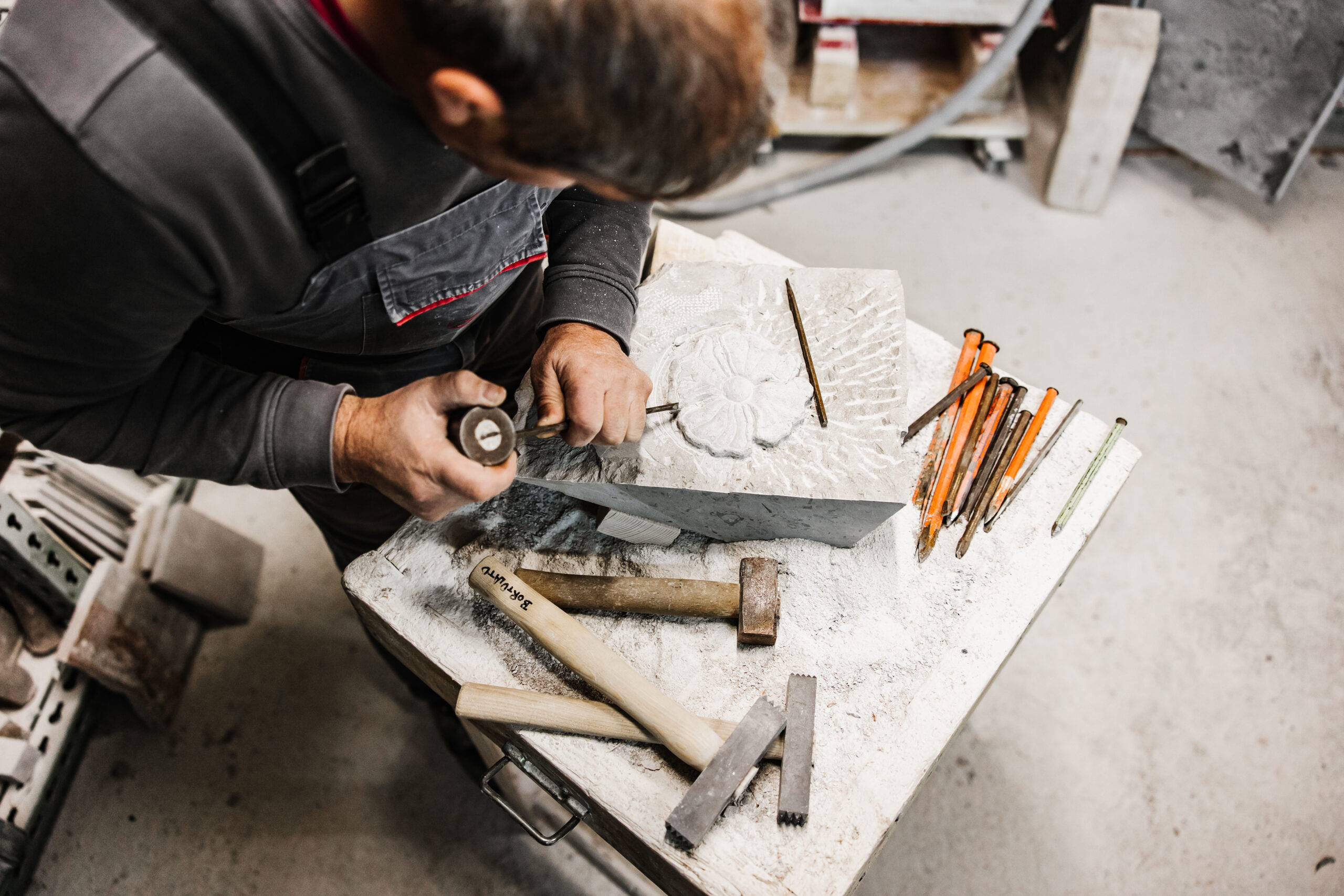
In the workshop, he combines the tradition with innovation. The stone is first cut to size on the saw, then placed on the lathe for shaping. Rounded forms are turned carefully; others are refined with grinders and pneumatic chisels. Once the basic form emerges, Jernej begins ‘štokanje’ the art of texturing stone with a toothed hammer called a ‘bočarda’, creating a surface that catches light and shadow just like the dry walls of Karst villages.
Each object, whether a bowl, vase, or grinder, takes between thirty minutes and five hours to complete. Every move must be deliberate, each strike measured.
“Stone forgives nothing. Every decision you make stays in it forever.”
3. Timeless design
Miniatures of a Vanishing Heritage
To make stone feel at home again in modern life, Jernej Bortolato turned to design. Together with designer Andraž Debeljak, he explored how the weight of stone could meet the lightness of form. Through countless experiments, they found the perfect balance.
“Stone needs to feel just enough solid and just enough elegant.”
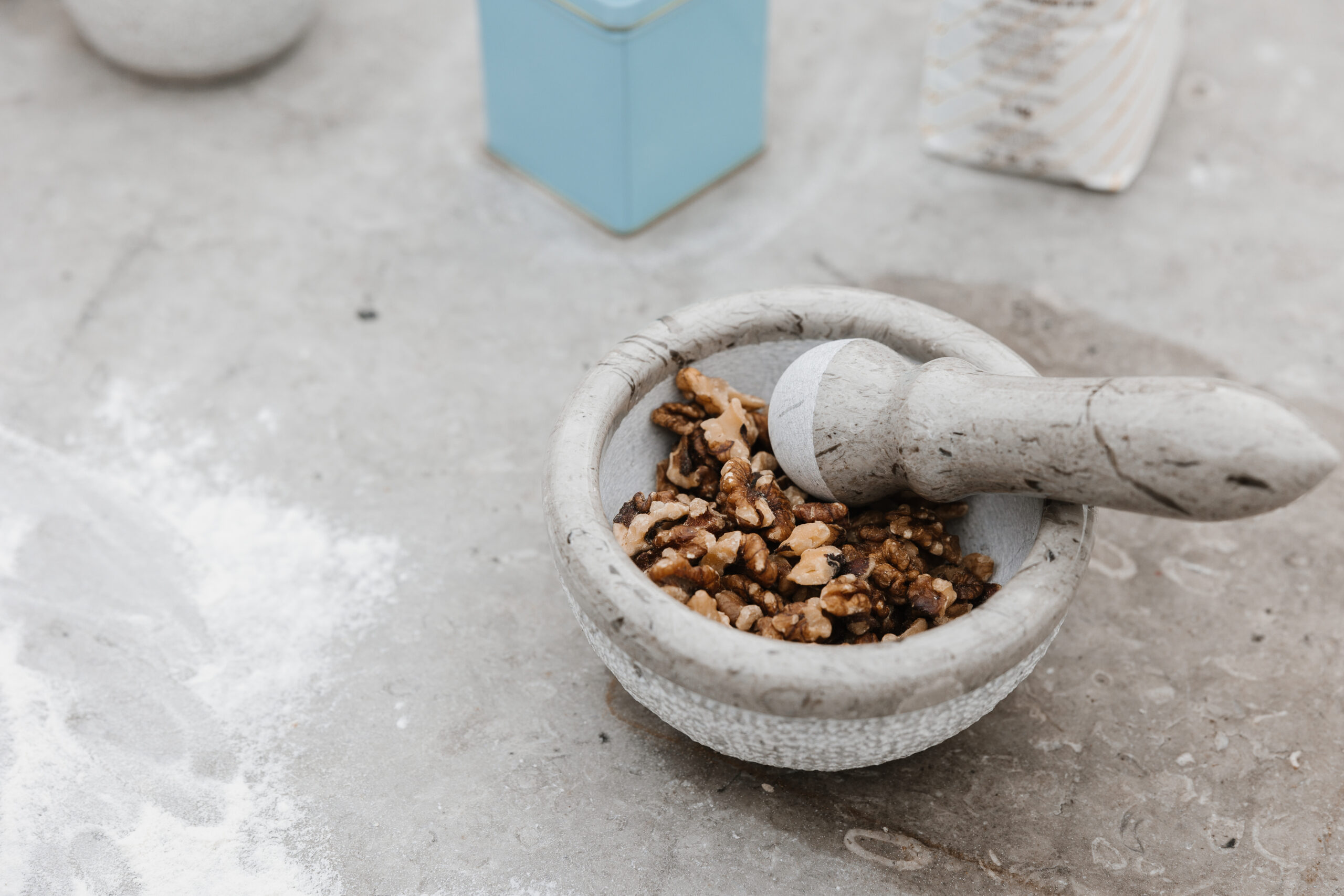
Bortolato’s pieces draw from traditional forms once used across the Karst – functional, purposeful, and built to last. The ‘posoda za mast’ for example, reimagines the large vessels once used to store lard and sausages in the region’s cool wine cellars before refrigerators existed. Jernej reshaped them into smaller containers for sugar, herbs, or salt allowing a fragment of everyday history to live again in today’s kitchens.
Other designs reach further back in time. His carved bookends echo the stone portals that framed Karst homes for centuries. Their motif, a star once etched above doorways, traces to ancient Slavic symbolism, known locally as Perunika or Svarica, the sign that, legend says, “warned the old gods of lightning and thunder to spare the home.” This knowledge, passed quietly through generations until the mid-19th century, has nearly disappeared.
In each piece, Jernej brings fragments of that vanishing heritage back into the rhythm of daily life.
4. Legacy
Keeping Slovenia’s Limestone Heritage Alive for Generations
For Jernej Bortolato, working with stone has never been just about form. It’s about connection between generations, between craftspeople, between people and the earth.
Beyond his workshop, Jernej has become one of Slovenia’s most active advocates for stone craftsmanship. As a member of the regional Chamber of Craft, he helps organise festivals, exhibitions, and the annual Festival Kamna to celebrate the Karst’s stonemason tradition. He runs workshops for children and tourists, mentors students at the Sežana School of Stone Design, and connects local artisans to collaborate on craft that would otherwise fade away.
“Working with young people is crucial.They see the world differently and open new ways of looking at stone.”
His commitment has earned him national recognition and a European craftsmanship award, but Jernej’s greatest achievement is the community he has built a living network of makers who keep Slovenia’s stone heritage alive.
“Stone is precious because once it’s taken from nature, it doesn’t grow back. That’s why it must be used with purpose.”
To give or own one of his pieces is to honour that belief, that every fragment of stone, shaped with care, holds a responsibility to endure.

Made to Keep
We handpick our makers and products to be sure they will last a lifetime.

Made in Europe
All products are manufactured in Europe, if not exclusively at the maker’s location.

We stay with you
You will receive maintenance advice, and can access our repair and resell services.

Truly yours
A lot of our handmade products are made to order – just for you.
The Keepers.
Good things worth keeping.
We believe in things made to last: pieces crafted with care, rooted in centuries-old traditions, and designed to outlive trends. Buy to keep. And pass your keepers down the generations with stories to tell.
Follow us: