

Ton
Bystřice pod Hostýnem, Czechia · Est. 1953


The factory in Bystřice pod Hostýnem, located in the hills of eastern Moravia, has been producing bentwood furniture for over 165 years. This is the art of steam bending solid wood into curves that seem impossible, a craft that requires patient hands and deep knowledge passed down through generations. In a world of automation and mass production, Ton proves that some things are still done better by people than machines.
Our Ton favourites
-

 Ironica ChairMade in Czechia by Tonfrom 190,32 €
 -

 La Zitta ChairMade in Czechia by Tonfrom 352,58 €
 -

 Malmö Table 706Crafted from solid wood in Czechia by Tonfrom 1.489,62 €
 -

 Jylland TableCrafted from solid wood in Czechia by Tonfrom 1.334,68 €
 -

 Stelvio TableCrafted from solid wood in Czechia by Tonfrom 3.262,28 €
 -

 Malmö Table 707Crafted from solid wood in Czechia by Tonfrom 2.148,42 €


Origins and people
From Thonet’s vision to six generations of Czech makers
The story begins with Michael Thonet, the German-Austrian cabinetmaker who discovered how to bend solid wood using steam. In 1856, Thonet established a factory in Koryčany, Moravia. Two years later, in 1861, he opened a second manufactory in Bystřice pod Hostýnem, where beech forests grew thick on the mountainslopes and water powered the mills.
The location proved ideal. Beech wood from the surrounding Hostýn range had the right density and grain. The Bečva River provided power and transport. Withindecades, Bystřice became one of the largest bentwood furniture producers in the Austro-Hungarian Empire, employing over 2,000 craftspeople at its peak.
The location proved ideal. Beech wood from the surrounding Hostýn range had the right density and grain. The Bečva River provided power and transport. Within decades, Bystřice became one of the largest bentwood furniture producers in the Austro-Hungarian Empire, employing over 1,000 craftspeople at its peak.
“To us, wood is more than just a material. It is a living organism that deserves respect and care.”
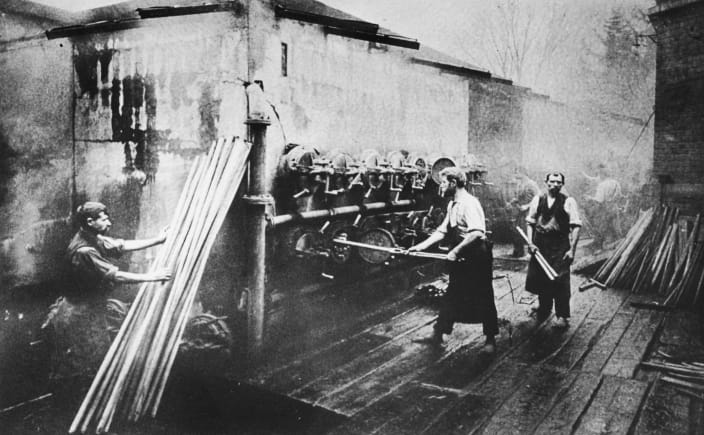
The factory changed hands through wars and political shifts. After World War I, when the empire dissolved, the factory continued under new ownership. In 1953, the communist state nationalised it, merging several furniture makers into one enterprise. The company was renamed Ton (abbreviation for “Továrny na ohýbanýnábytek” or English “Bentwood Furniture Factories”). The craft survived, but the name disappeared. The new name signalled both respect for heritage and readiness for what came next.
With the Velvet Revolution in 1989, everything changed. The factory was returned to private hands. In 1994, it was made a joint-stock company.
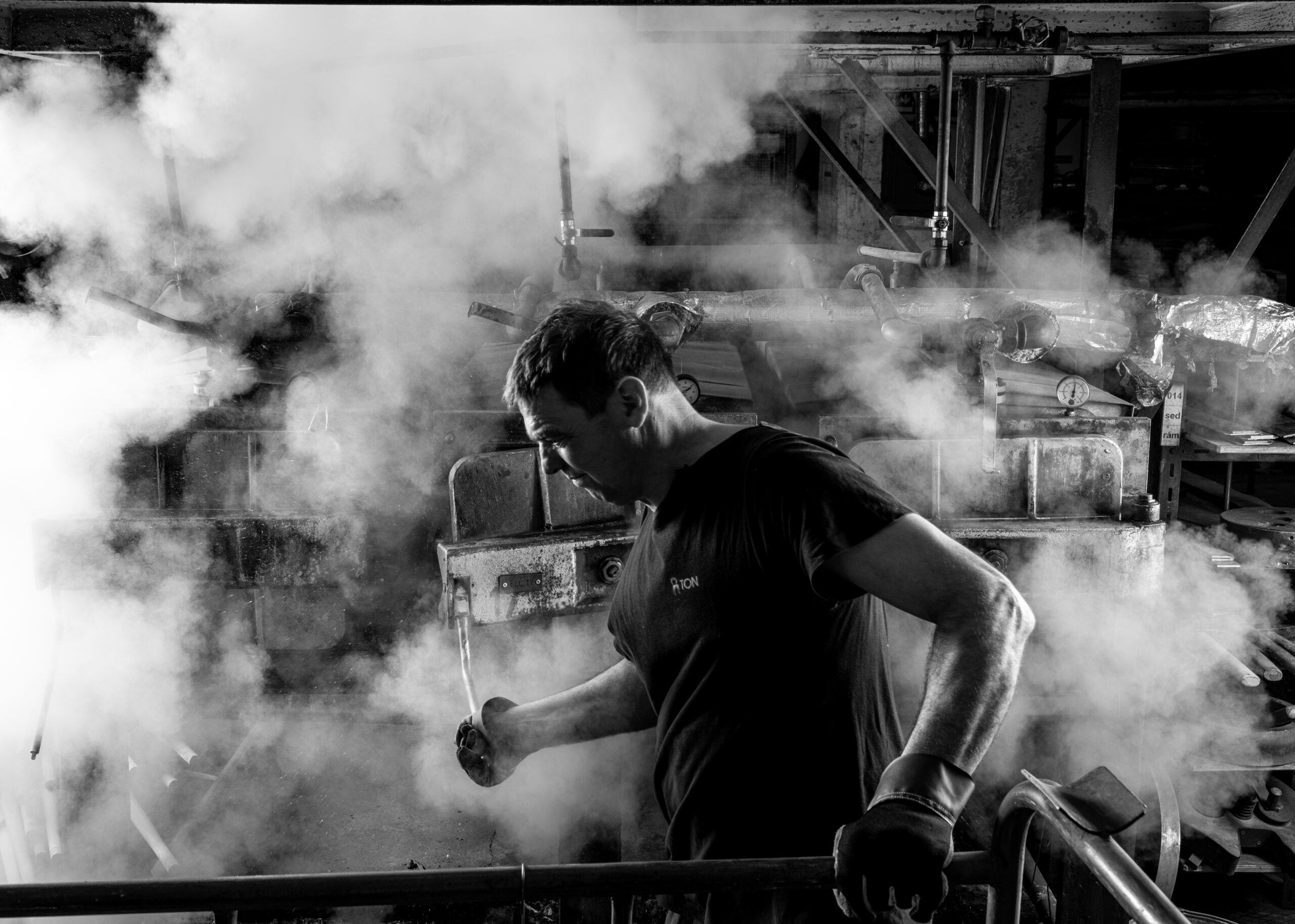
Today, Ton remains in Bystřice pod Hostýnem, where six generations of furniture makers have passed down their knowledge. The beechwood still comes from responsibly managed forests certified by the Forest Stewardship Council (FSC). The steam bending rooms still fill with white vapor each morning. And craftspeople who have worked at Ton for twenty, thirty years still teach younger hands how it’s done.
Craft and materials
From FSC forests to steam rooms, shaped entirely in Bystřice
Every Ton chair begins with beech from the surrounding Hostýn range managed according to strict FSC standards. The wood is chosen for fine, even grain and theability to bend without splintering. It arrives at the Bystřice factory as sawn lumber and is left to air dry for months before it can be worked.
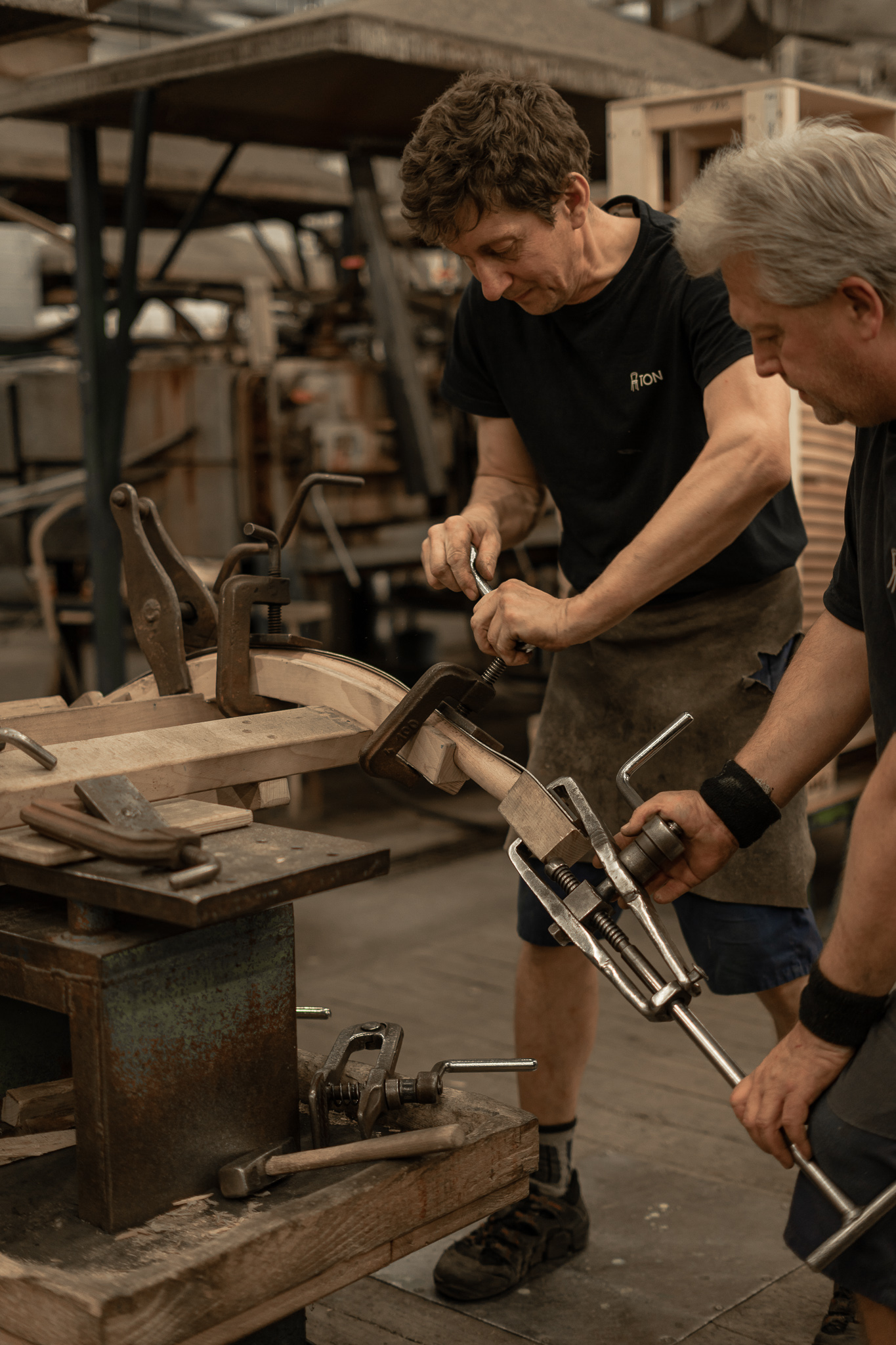
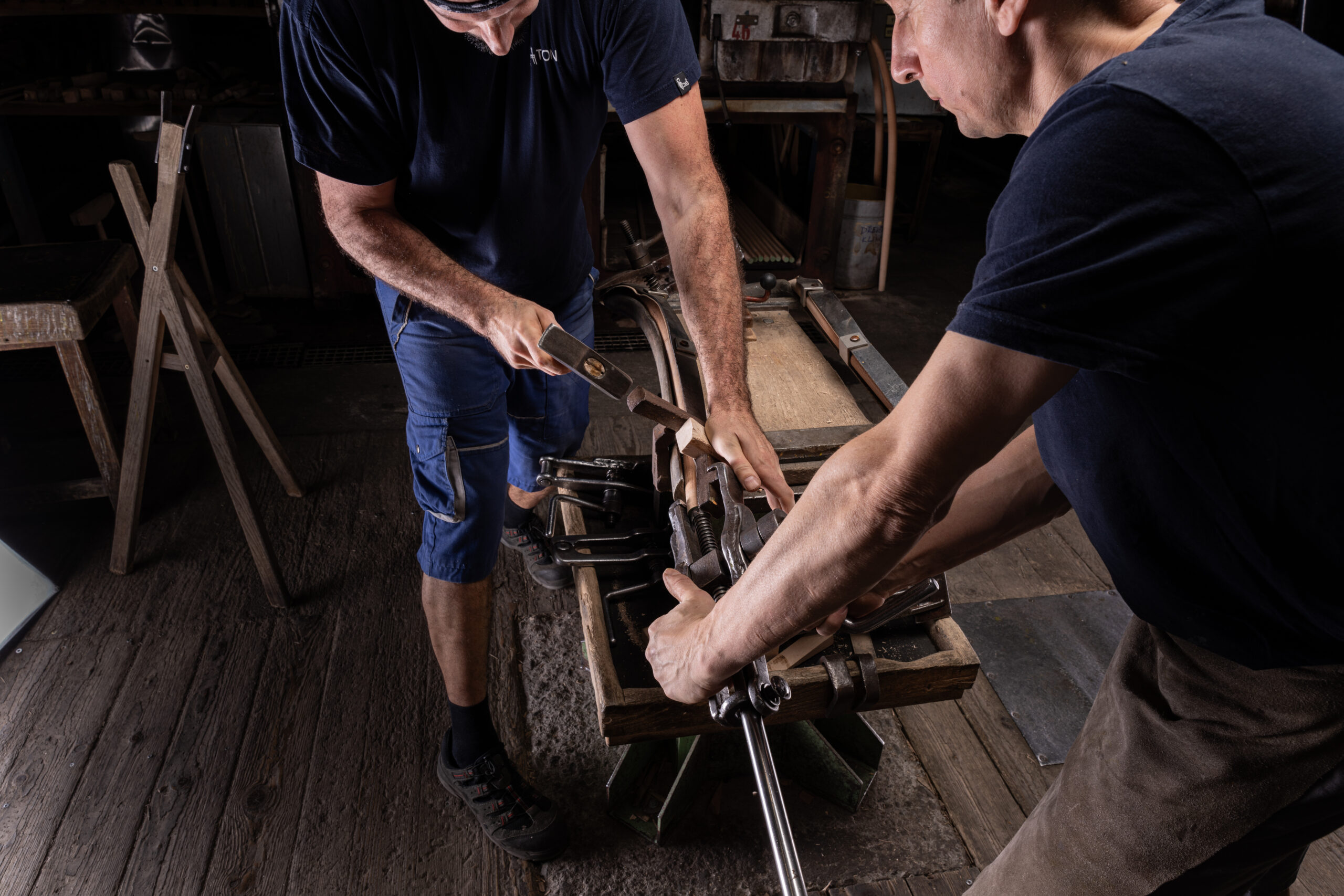
The bentwood process hasn’t changed much over time. Straight lengths of beech are placed in steam chambers where heat and moisture soften the natural bondsbetween wood fibers. After hours in the steam, the wood becomes pliable. This is when the bending happens.
Craftspeople work quickly, while the wood is still hot and flexible. They secure one end of the steamed piece in a metal form, then slowly curve it around the mold, working with the grain, not against it. The wood is clamped in place and left to dry in its new shape. As it cools and the moisture evaporates, the wood hardenspermanently into curves that would be impossible to achieve any other way.
“Every Ton chair is the result of combining traditional wood handcrafting with a modern approach to production. We blend precise craftsmanship with contemporary technology to create products that last for generations.”

The iconic Chair No. 14, first designed by Thonet in 1859, requires only six pieces of steam-bent beech, ten screws, and two metal fasteners. No glue. The simplicity is deceptive. Each component must be bent to exact specifications. The joints must align perfectly. A single mistake means starting over.
Ton produces other chairs using different techniques, but steam bending remains at the heart of what they do. It’s visible in the flowing backrests of the Merano chair, the elegant arches of Chair 811 with its cane seat, the gentle curves that make Ton furniture recognizable across a room.
After bending and drying, each piece is sanded smooth, assembled by hand, and finished. Ton uses natural oils and lacquers that let the wood breathe and agegracefully. The scraps and shavings aren’t wasted. They’re collected and used to heat the factory during cold Moravian winters, a practice rooted in centuries of efficient woodworking.
The company holds FSC Chain of Custody certification, meaning every stage from forest to finished chair is traceable and responsibly managed. This isn’t marketing. It’s a commitment to the forests that have sustained this craft for 165 years.
Timeless design
Heritage forms meet contemporary vision
Ton doesn’t chase trends. The company builds on a foundation of classic bentwood designs, then invites contemporary designers to reinterpret them for modern life.
Chair No. 14 remains their most iconic piece. Designed in 1859, it became the world’s first mass-produced chair, with over 50 million made by 1930. Its success layin its simplicity: six bent beech components that could be shipped flat and assembled anywhere. The design is still in production today, with only minor alterations and improved finishing techniques.
Chair 811, with its sinuous backrest and cane seat, represents the height of bentwood elegance. The La Zitta chair brings minimalist restraint. The Merano chair, named after the famous Italian spa town, combines traditional bending with modern proportion.
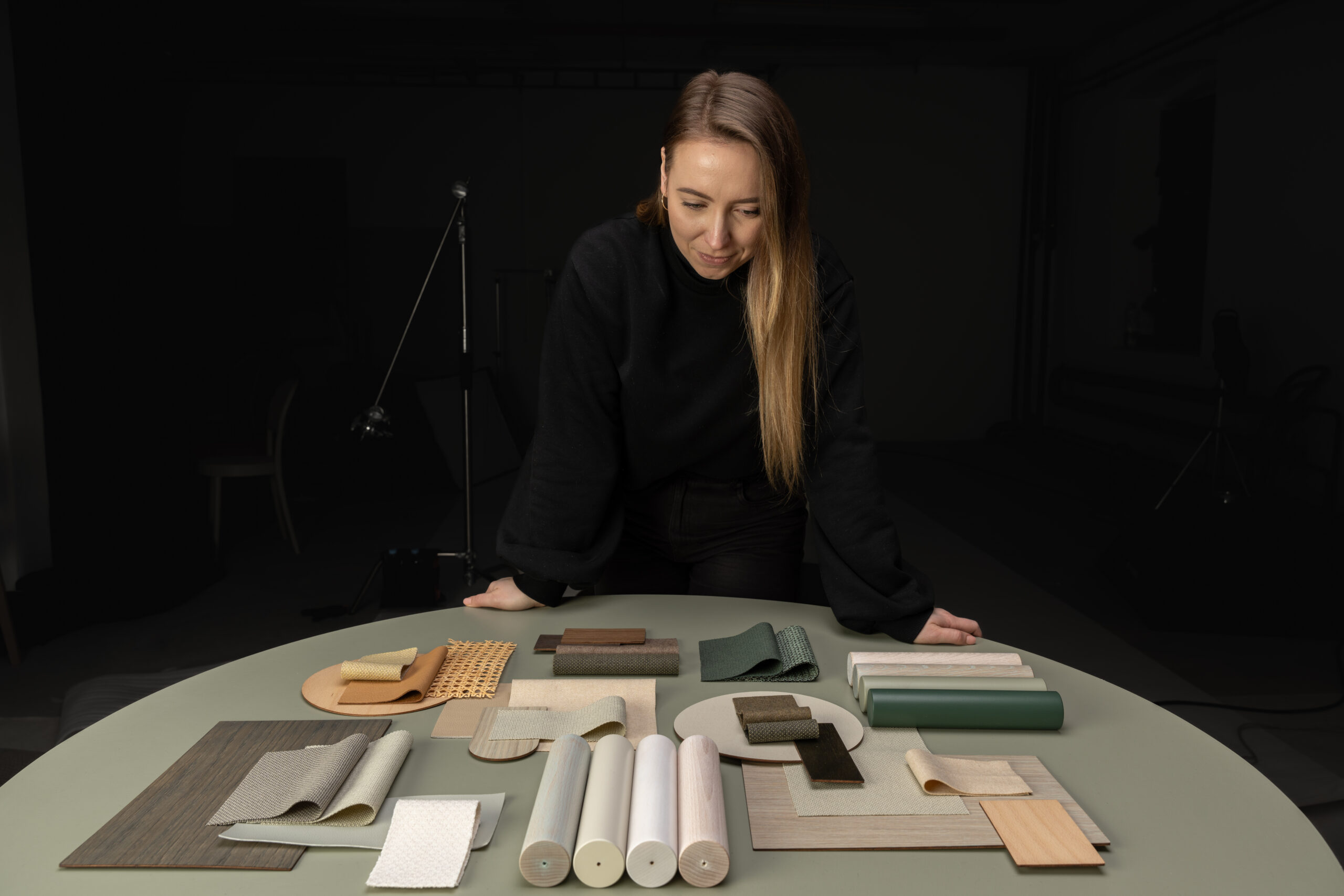
In recent years, Ton has collaborated with designers like Swedish studio Claesson Koivisto Rune, who created the No. 314 chair as a contemporary interpretation of the No. 14. French designer Patrick Norguet designed the Cissy lounge chair, combining soft upholstery with bent beech frames. These pieces honor the past whilespeaking to today’s aesthetic.
The forms remain rooted in what works: curved backs that support without rigidity, seats shaped for long conversations, proportions refined through generations of use. From Vienna cafés to Tokyo offices, from Parisian bistros to New York lofts, Ton chairs adapt to their surroundings while remaining unmistakably themselves.
These are chairs made for daily use, not display. Built for the years, not the season. Designed to be kept.
Legacy
Where the factory is the community
Fathers and sons still work side by side in the Bystřice factory. Craftspeople who learned steam bending decades ago now teach the next generation, passing downknowledge that cannot be found in any manual. The factory sits surrounded by the same beech forests that drew Thonet here in 1861, a rarity in modernmanufacturing where materials and making exist continents apart.
In the 1990s, a Ton employee carried the iconic Chair No. 14 to the summit of Mont Blanc as a symbol of respect for tradition. Thirty-four years later, the gesture wasrepeated with Chair 314, honoring both heritage and innovation. In 2021, Ton marked 160 years of continuous production with a book documenting the little storiesthat shaped the factory, the town, and the craft itself.
Each chair passes through at least twenty pairs of hands before completion. Visitors can tour the workshops where this has happened continuously since thebeginning, watching steam rise from chambers and hands work quickly. Choosing Ton, you are supporting a factory where bentwood has been made withoutinterruption since 1861 first opened the doors, sustaining a community built around this craft, and keeping alive knowledge that cannot be taught by machines.

Made to Keep
We handpick our makers and products to be sure they will last a lifetime.

Made in Europe
All products are manufactured in Europe, if not exclusively at the maker’s location.

We stay with you
You will receive maintenance advice, and can access our repair and resell services.

Truly yours
A lot of our handmade products are made to order – just for you.
The Keepers.
Good things worth keeping.
We believe in things made to last: pieces crafted with care, rooted in centuries-old traditions, and designed to outlive trends. Buy to keep. And pass your keepers down the generations with stories to tell.
Follow us: